 how-to
How to Handle a Broken Car Key: Step-by-Step
Table of Contents
- Assess the Damage: Types of Broken Car Keys
- Immediate Steps When Your Key Breaks
- How to Remove a Key Snapped in the Lock
- DIY Temporary Fixes for Broken Key Handles
- Broken Key in Ignition Removal Tools and Techniques
- When to Call a Professional Locksmith
- Car Key Replacement Cost UK and Warranty Coverage
- Key Programming and Model-Specific Considerations
How to Handle a Broken Car Key: Step-by-Step
Last Updated: August 3, 2026
When your car key breaks, you're stranded and facing an uncertain repair bill. Knowing how to handle broken key situations can save you hours of stress and hundreds of pounds. This guide walks you through every scenario, from keys snapped in the ignition to malfunctioning electronic fobs, so you can make the right decision immediately.
Broken car keys come in different forms, each requiring a different approach. A snapped mechanical key blade demands different tools than a broken key fob shell or a failed transponder chip.
Assess the Damage: Types of Broken Car Keys
Understanding what type of damage you're dealing with determines your next steps.
Snapped key blade in the ignition cylinder
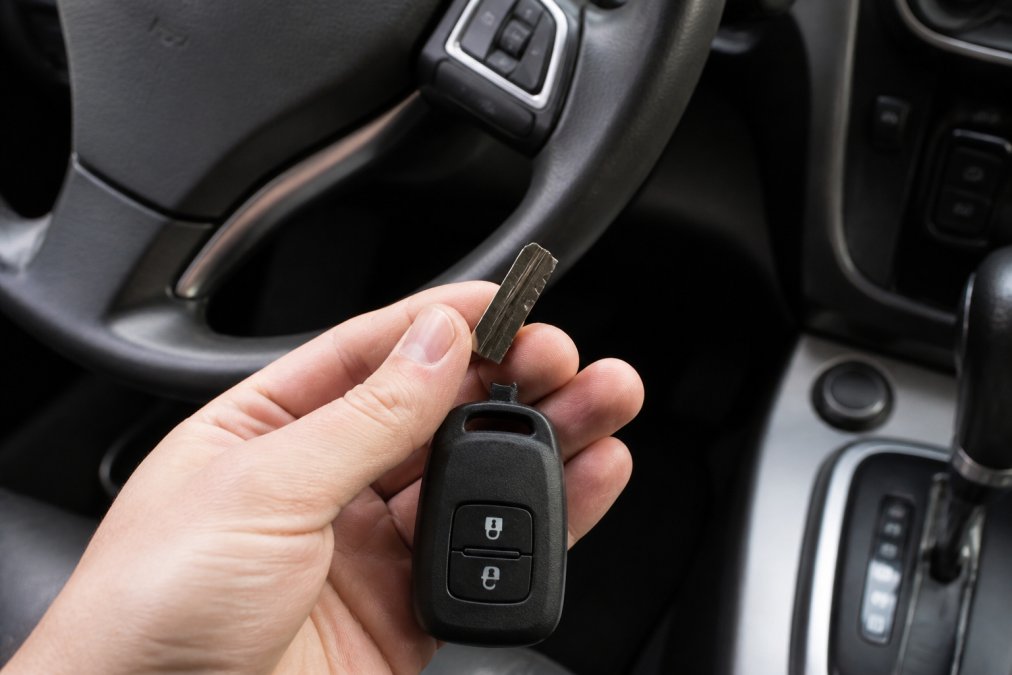
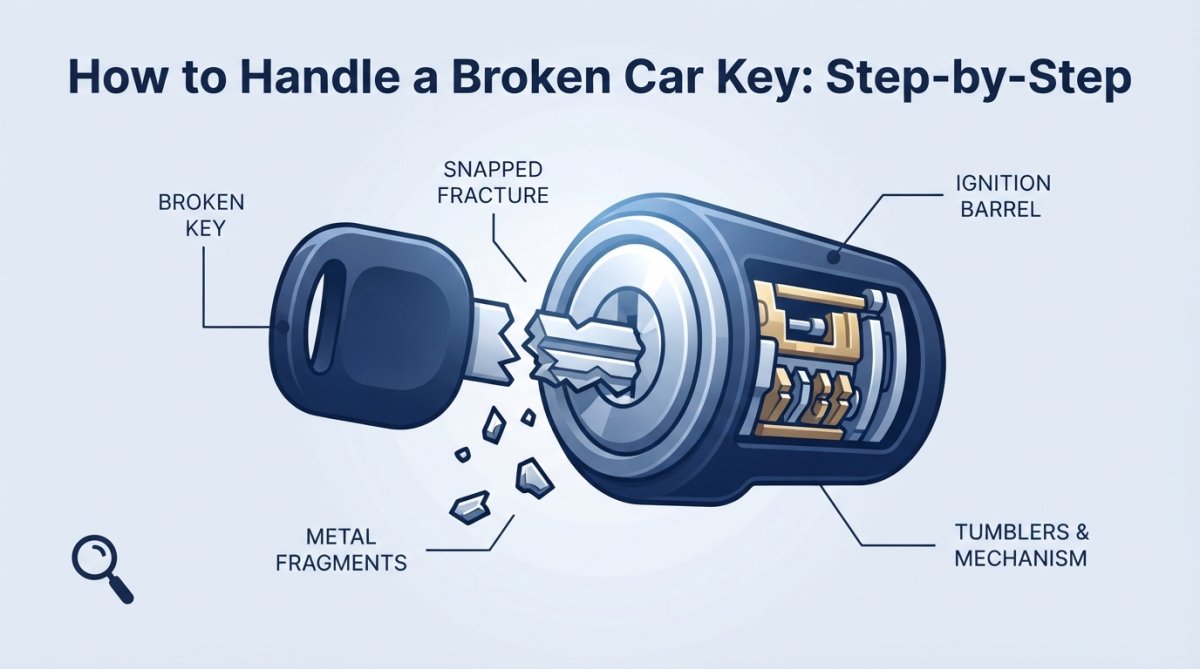
A snapped key blade is the most common breakage scenario. The key snaps at the shaft, leaving part stuck in your ignition cylinder or door lock. Ignition breaks often happen because drivers apply excessive force while turning a worn or slightly misaligned key. If the key broke cleanly, you may see a straight break line. If it splintered, extraction becomes more delicate, metal fragments can scratch the lock cylinder's internal pins, potentially causing permanent damage.
Broken key handle or fob shell
A broken key handle differs entirely from a snapped blade. The plastic or rubber grip cracks, splits, or separates from the metal shaft. This often happens from repeated dropping, sitting on the key, or extreme temperature changes.
A broken key handle is usually cosmetic; the key still works mechanically. However, if the handle damage exposes the metal shaft or electronic components, water and dirt can enter, causing corrosion or circuit board failure.
Malfunctioning transponder chip or immobilizer system
The key appears intact, but the vehicle won't start. The immobilizer system (present on nearly all cars made after 1995) won't recognize the key's transponder chip signal. Transponder chips can fail from age, water exposure, electrical shock, or manufacturing defect.
Immediate Steps When Your Key Breaks
Your first actions determine whether you cause additional damage or preserve your options.
Stop turning the key immediately
The moment you feel unusual resistance or hear a cracking sound, stop. Do not force the key further into the lock or ignition. Continued pressure can break the key into multiple fragments, damage the lock cylinder's internal pins permanently, or activate security features that lock you out temporarily.
Do not force extraction
Your instinct might be to yank the key out, but this causes expensive secondary damage. If the key is snapped in the ignition cylinder, pulling hard can break the key into smaller pieces, scratch or gouge the cylinder walls, or damage the lock wafers, requiring cylinder replacement (£150-400 depending on your vehicle).
Document the break and assess safety
Take a photograph of the broken key in place. Note the exact moment it broke, was it in the ignition, door lock, or boot lock? Check whether you can still access your vehicle. If you're in a dangerous spot, call emergency roadside assistance first.
How to Remove a Key Snapped in the Lock
Removing a broken key requires patience, the right tools, and knowledge of what NOT to do.
Tools needed for key extraction
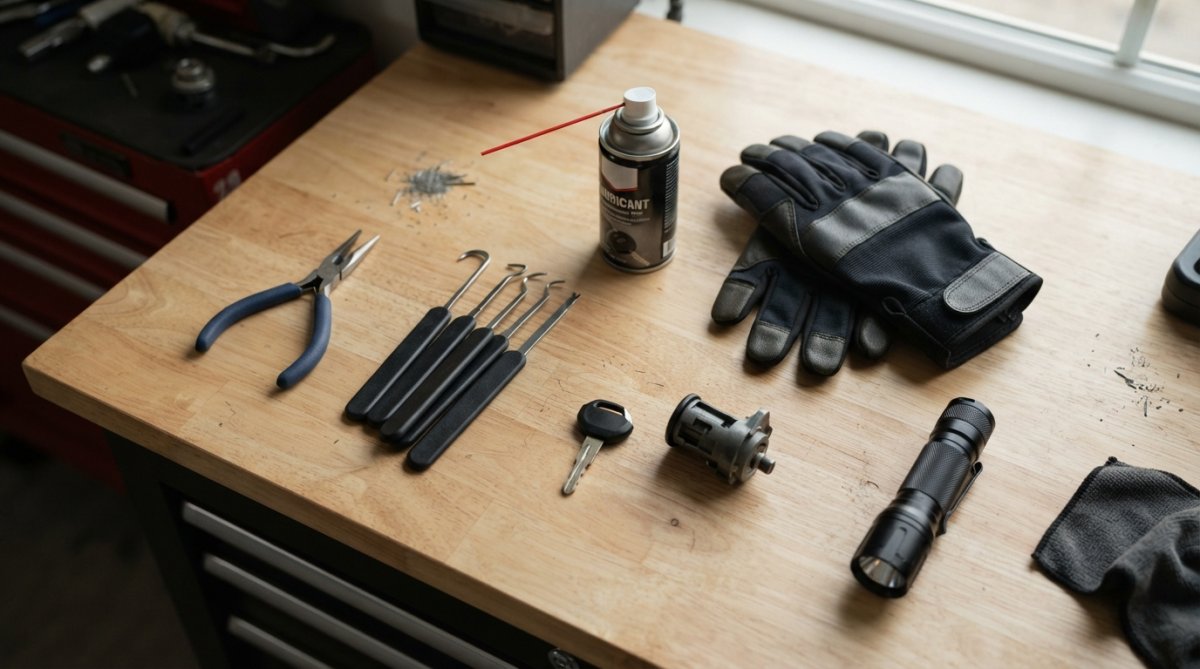
Essential tools:
- Key extractor tool - a small, specialized hook designed specifically for this task (£5-15)
- Needle-nose pliers - for gripping and gentle removal if the key protrudes enough
- Lubricant spray - silicone-based or graphite lubricant helps the key slide out (not WD-40, which attracts dirt)
- Flashlight or headlamp - you need clear visibility inside the lock
- Small mirror - helps you see into the lock cylinder at awkward angles
- Safety gloves - protects your hands from sharp metal edges
Do not use superglue (it hardens inside the lock permanently), screwdrivers (they scratch the cylinder), or pliers alone without a key extractor (they crush the key rather than removing it).
Step-by-step extraction process
Step 1: Apply lubricant (Time: 1 minute) Spray a small amount of graphite lubricant or silicone spray into the lock. Let it sit for 30 seconds. This reduces friction and helps the key slide out more easily. Do NOT use oil-based lubricants; they attract dirt and can gum up the lock permanently.
Step 2: Insert the key extractor tool (Time: 2-3 minutes) Slide the extractor tool into the lock alongside the broken key. The hook should catch the key's edge or notch. Work slowly and carefully.
Step 3: Apply steady, gentle pressure (Time: 1-2 minutes) Once the hook catches the key, apply steady backward pressure. Do not jerk or yank. A steady pull works far better than sudden movements.
Step 4: Remove the key fragment (Time: 30 seconds) As the key slides out, keep tension on the extractor. Once the key is partially out, use needle-nose pliers to grip and withdraw it completely.
When DIY extraction fails
If you've tried extraction for more than 10 minutes without success, stop. Continued attempts risk pushing the key deeper into the lock or scratching the lock beyond repair. Call a professional auto locksmith.
DIY Temporary Fixes for Broken Key Handles
A broken key handle is often cosmetic, but it can become functional damage if not addressed.
Epoxy mould and reshelling options
If the plastic handle is cracked but the key blade and electronic components are intact, epoxy can provide a temporary fix. Knead two-part epoxy putty until uniform in colour, mould it around the broken handle area, and let it cure for 24 hours. This works for 2-4 weeks before the epoxy begins to crack under repeated use.
Reshelling is more durable if your key is a remote head key (fob with buttons). Aftermarket key fob shells are available for most vehicle models (£8-20). You can transfer the electronics from your broken shell into the new one by carefully opening both shells, removing circuit boards and batteries, and reassembling them in the new shell.
What NOT to do with broken metal fragments
Do not attempt to glue the pieces back together, file or sand the break smooth and reuse the shortened key, or leave fragments loose in your pocket or car. Dispose of broken metal fragments safely or save them for your locksmith.
Broken Key in Ignition Removal Tools and Techniques
Ignition extraction requires more caution than door lock removal because the ignition cylinder is more delicate and more expensive to replace.
Needle-nose pliers and key extractor tools
Needle-nose pliers work best when the key protrudes far enough to grip. If the break is flush with the ignition opening, a key extractor tool is your only option. Key extractors come in two main types: hook extractors (curved hooks that catch the key's edge) and spiral extractors (screw-in tools that grip the key as you turn). Hook extractors are gentler and more forgiving for DIY use.
Apply lubricant first, then insert the extractor slowly. The goal is to catch the key without scratching the cylinder walls.
Lubricant spray and lock cylinder care
Graphite lubricant is the safest choice for car locks. Silicone spray works too, but avoid WD-40 (attracts dust and can clog the lock mechanism), oil (becomes sticky over time), and grease (too thick; it collects dirt). After extracting a broken key, apply a small amount of graphite lubricant to the lock cylinder. This protects the internal pins and helps your new key operate smoothly.
Safety precautions when handling broken metal
Broken key fragments have sharp edges. Wear safety gloves when handling them to avoid cuts. Never leave broken metal fragments in your ignition or lock, they can interfere with your replacement key, scratch the lock cylinder further, or cause electrical issues if they contact the ignition circuit.
When to Call a Professional Locksmith
Knowing when to stop and call for help separates smart decisions from costly mistakes.
Signs you need an auto locksmith
Call a professional if the broken key won't come out after 10 minutes of gentle extraction attempts, the key broke deep inside the lock and you can't see it, you hear grinding sounds when trying to remove the key (sign of internal lock damage), multiple key fragments are stuck in the lock, or the lock cylinder is damaged and the key won't turn smoothly. An auto locksmith can extract the key safely and program a replacement on-site.
What locksmiths can handle on-site
Professional auto locksmiths carry specialized extraction equipment, key-cutting machines, and programming devices. They can extract broken keys without damaging the lock cylinder, cut replacement keys to your vehicle's specifications, program transponder chips and immobilizer systems, repair or replace damaged lock cylinders, and provide spare keys on the spot.
Mobile Keys Norfolk offers 24/7 on-site locksmith services across Norfolk, with a 30-minute arrival guarantee. Our team handles broken key extraction and replacement key programming for all vehicle models, eliminating the need for towing to a dealership.
Emergency roadside assistance options
If you're stranded on a motorway or in an unsafe location, call your breakdown cover provider first (AA, RAC, Green Flag). They'll dispatch assistance to your location. If you don't have breakdown cover, call a mobile locksmith directly. Mobile Keys Norfolk operates 24/7 and can reach you anywhere in Norfolk within 30 minutes.
Car Key Replacement Cost UK and Warranty Coverage
Understanding your replacement options and costs helps you make an informed decision.
Mechanical key versus remote head key pricing
A basic mechanical key (blade only, no electronics) costs less to replace than a remote head key (fob with buttons and transponder chip).
Mechanical keys: Cutting and programming typically cost £25-50. Suitable for older vehicles or spare keys. No battery required.
Remote head keys (fobs with transponder chips): Cutting, programming, and chip encoding typically cost £100-250. Required for most vehicles made after 2000. Includes battery and electronic components. Must be programmed to your vehicle's immobilizer system.
The exact cost depends on your vehicle's make, model, and year. Luxury vehicles and newer models with advanced security systems cost more to replace.
Key fob circuit board and transponder chip programming
If your key fob's circuit board is damaged but the key blade is intact, you can sometimes replace just the circuit board (£40-80) rather than the entire fob. Transponder chip programming requires specialized equipment. Dealerships charge £150-300 for this service. Mobile locksmiths typically charge £80-150 because they have lower overhead.
Dealer replacement versus mobile locksmith services
Dealership services: Guaranteed compatibility with your vehicle. Often covered by manufacturer warranty if still valid. Higher cost: £200-400 for a complete replacement key. Requires towing or driving to the dealership. Longer wait times (days, not hours).
Mobile locksmith services: On-site service; no towing required. Faster turnaround (30 minutes to 2 hours). Lower cost: £80-200 for most vehicles. 24/7 availability, including weekends.
For most drivers, a mobile locksmith offers better value and convenience. Mobile Keys Norfolk provides on-site key cutting and programming at a fraction of dealership prices, with a 30-minute arrival time across Norfolk.
Insurance and warranty coverage for broken keys
Most vehicle insurance policies do NOT cover lost or broken keys. Key replacement is typically considered a maintenance expense, not an insurable loss. However, some policies include roadside assistance, which may cover locksmith callout fees (often £50-100). Check your policy documents or contact your insurer to confirm.
If your vehicle is under manufacturer warranty, the warranty typically covers defective keys (keys that fail due to manufacturing defect, not accidental damage). If your key broke due to a defect rather than normal wear, contact your dealership about warranty replacement.
Key Programming and Model-Specific Considerations
Not all keys are programmed the same way. Your vehicle's age, make, and security system determine the programming method.
Reprogramming transponder chips on-site
Modern cars use transponder chips (also called RFID or radio frequency identification chips) embedded in the key. When you insert the key, the chip sends a signal to the vehicle's immobilizer system. If the signal matches the programmed code, the engine starts. If not, the engine won't turn over.
Reprogramming a transponder chip requires access to the vehicle's OBD-II diagnostic port (usually under the steering wheel), specialized programming equipment, and knowledge of your vehicle's specific programming sequence. Mobile locksmiths carry this equipment and can program most transponder chips on-site within 15 minutes.
Model-specific differences in key fob and door lock systems
Key design varies significantly by manufacturer. Ford and Vauxhall typically use standard transponder chips with straightforward programming. BMW and Mercedes use advanced encryption requiring manufacturer-specific equipment. Mobile Keys Norfolk stocks equipment for all major UK vehicle brands and can program keys for vehicles from 1995 onwards.
Vehicle security and immobilizer compatibility
Immobilizer systems vary by vehicle age and manufacturer. Older vehicles (pre-1995) may not have immobilizers at all; they use mechanical locks only. Modern vehicles use sophisticated encryption that changes with each manufacturer.
If you're replacing a key for a vehicle you don't own, verify that the locksmith has experience with that specific model. Incompatible programming can cause the immobilizer to reject all keys, requiring expensive dealer reprogramming.
A broken car key feels like a crisis, but it's manageable once you understand your options. Whether the key snapped in your ignition, the fob shell cracked, or the transponder chip failed, the right response prevents secondary damage and gets you back on the road quickly.
If you're in Norfolk and need immediate help, Mobile Keys Norfolk provides 24/7 on-site key replacement with a 30-minute arrival guarantee. We handle extraction, cutting, and programming for all vehicle models, eliminating dealer visits and towing costs. Call 07399 583760 to get back on the road today.
Frequently Asked Questions
What should I do immediately if my car key snaps in the ignition?
Stop turning the key at once to avoid pushing broken fragments deeper into the lock cylinder. Do not force extraction. Turn off the engine if it's running and remove your hands from the key. Take a photo of the damage for your records. If the key blade is partially visible, you may attempt extraction with needle-nose pliers, but if it's fully embedded, contact a professional auto locksmith. Forcing extraction risks damaging the ignition cylinder, which costs significantly more to repair than key replacement.
Can I use superglue or epoxy to repair a broken car key?
Superglue or epoxy can temporarily hold a broken key handle together for a mechanical key, but this is not a reliable long-term solution. The repair may fail while the key is in the ignition, leaving fragments stuck inside. For transponder keys or key fobs with circuit boards, adhesive repairs can damage the electronics and prevent programming. A proper replacement key is safer and more cost-effective than repeated temporary fixes, especially for vehicles with immobilizer systems.
How much does it cost to replace a broken car key in the UK?
Costs vary significantly depending on your vehicle's age, make, and key type. A simple mechanical key replacement is less expensive than a remote head key or transponder key. Key fob circuit board programming adds to the cost. Dealer prices are typically higher than mobile locksmith services. Insurance may cover accidental key damage if you have breakdown cover or comprehensive insurance, though some policies exclude keys. Contact Mobile Keys Norfolk on 07399 583760 for a quote specific to your vehicle, as on-site mobile services often cost less than dealership visits and towing fees combined.
Does car insurance cover a broken or snapped car key?
Coverage depends on your specific insurance policy. Breakdown cover (such as through AA, RAC, or Green Flag) often includes emergency key replacement or lockout assistance. Comprehensive insurance may cover accidental damage to keys, but this varies by provider and policy terms. Mechanical key loss is rarely covered, but transponder key programming damage sometimes is. Check your policy documents or contact your insurer directly. Many drivers find that mobile locksmith services are more affordable than claiming on insurance due to excess fees and potential premium increases.
External Sources
[EXTERNAL_LINK: UK Vehicle Security and Immobilizer Standards | gov.uk]
[EXTERNAL_LINK: Consumer Rights Act 2015 and Key Replacement Warranties | which.co.uk]
[EXTERNAL_LINK: Automotive Locksmith Best Practices Guide | bsia.co.uk]
This article was written using GrandRanker