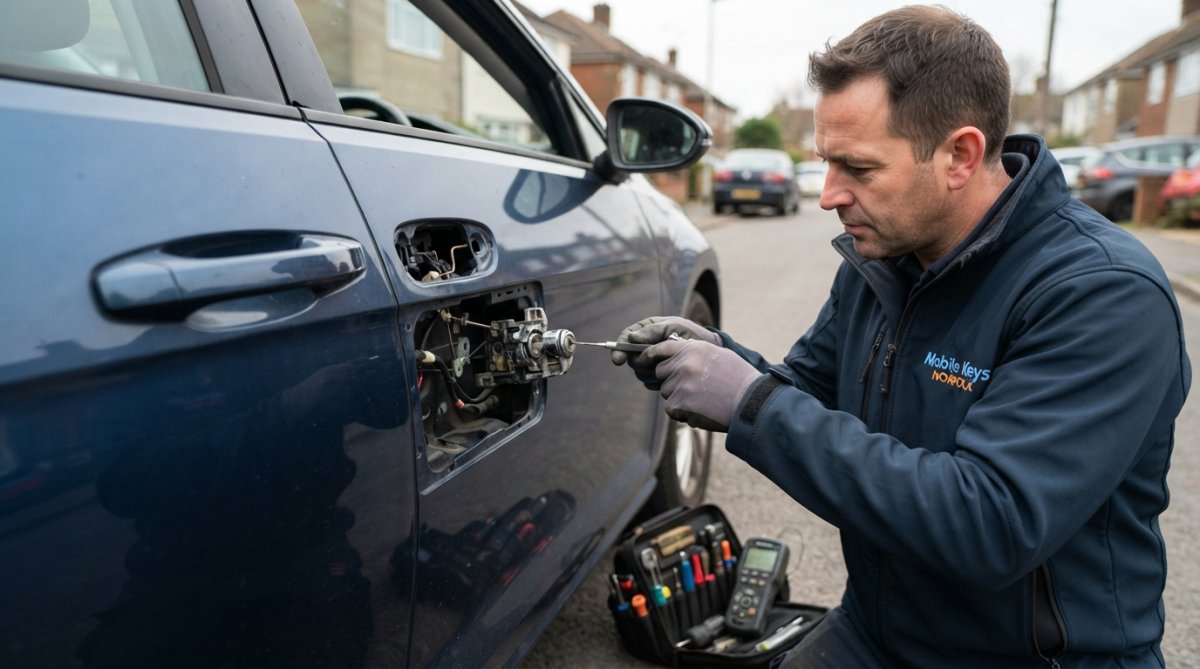
 blog
blog
Do Locksmiths Damage Car Locks? A 2026 Guide
Table of Contents
- Do Locksmiths Actually Damage Car Locks?
- Common Causes of Car Lock Damage
- How Professional Locksmiths Open Car Doors Without Damage
- Non-Destructive Car Entry: The Professional Standard
- Emergency Car Locksmith Services: What to Expect
- Car Key Replacement Cost UK and Damage Liability
- Vetting a Locksmith: How to Avoid Rogue Operators
- Signs of Damage and Post-Service Inspection
Last Updated: July 27, 2026
Do Locksmiths Actually Damage Car Locks?
The question "do locksmiths damage car locks" sits at the heart of a common fear among car owners facing an unexpected lockout. At Mobile Keys Norfolk, we work with drivers every day who worry that calling a professional locksmith will result in costly damage to their vehicle. The short answer: professional locksmiths rarely cause damage when they use proper techniques and equipment.
The difference between a professional locksmith and an untrained person attempting to force entry is the difference between precision and desperation. When you understand how modern locksmiths work, the anxiety often dissolves.
Common Causes of Car Lock Damage
Most car lock damage doesn't come from professional locksmiths. It comes from the environment, mechanical wear, and amateur attempts at entry.
Weather and time are silent killers of car lock mechanisms. Rust forms inside lock cylinders when moisture accumulates, particularly in Norfolk's coastal climate where salt spray accelerates corrosion. Keys jam in these corroded cylinders, forcing owners to apply pressure that can snap the key or crack the internal mechanism.
Manufacturing defects also play a role. Certain Ford and Vauxhall models from the 2010s developed a reputation for premature lock cylinder wear, leaving drivers stranded.
DIY lockout attempts cause more damage than professional intervention ever will. When a driver tries to pry open a door with a screwdriver, they risk cracking the door frame, bending the lock mechanism, and scratching the paint. When someone uses a coat hanger to manipulate the lock from inside a slightly-open window, they can bend the lock pins permanently out of alignment.
How Professional Locksmiths Open Car Doors Without Damage
Professional locksmiths open locked vehicles using non-destructive entry techniques refined over decades. The process starts with assessment, not action.
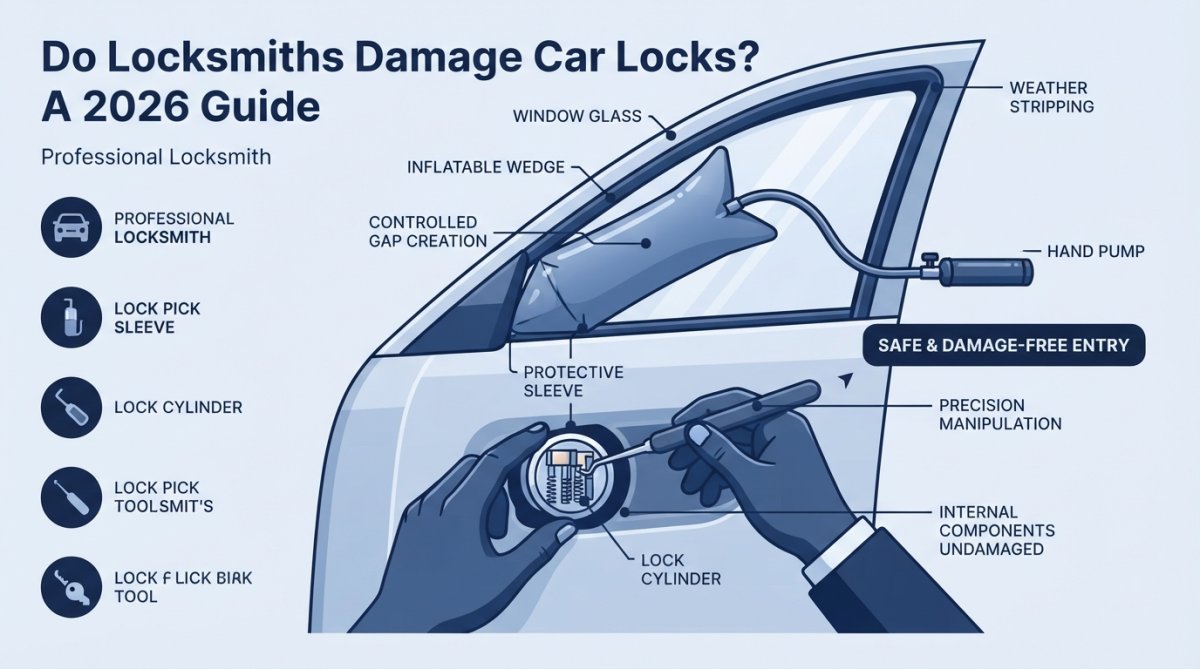
When a locksmith arrives, they examine the door, lock type, and vehicle model before touching anything. This 30-second assessment determines which tools will work best. Modern vehicles with keyless entry systems and immobilizer technology require different approaches than older mechanical locks.
The airbag wedge is one of the most important tools in a professional's kit. This inflatable bag is placed between the door frame and the door, then slowly inflated to create a small gap. Once the gap exists, the locksmith can insert a long-reach tool to manipulate the lock mechanism from inside. The entire process takes minutes and leaves no visible damage.
Lock picks and tension tools come next. A professional locksmith uses these with the same care a surgeon uses a scalpel. They apply gentle, measured pressure to manipulate the lock pins into the correct position. An amateur with the same tools would apply too much force and snap pins inside the lock.
For modern vehicles, locksmiths use specialized equipment to read and reprogram electronic locks. These methods bypass the physical lock entirely, leaving it completely untouched.
Destructive entry becomes necessary only when the lock is already damaged, frozen solid, or when the vehicle owner explicitly authorizes it as a faster alternative. A frozen lock in winter might require drilling out the cylinder rather than spending 45 minutes trying to thaw and pick it. In these cases, a professional locksmith will explain the situation, quote the cost of lock replacement, and proceed only with written consent.
Non-Destructive Car Entry: The Professional Standard
Non-destructive entry isn't just a best practice, it's the industry standard that separates certified locksmiths from rogue operators. This approach protects both your vehicle and the locksmith's reputation.
The term "non-destructive" means the entry method doesn't permanently alter or damage the lock, door, or surrounding components. The vehicle remains in the same condition it was in before the lockout occurred.
Specialized equipment makes non-destructive entry possible. A professional's toolkit includes airbag wedges, lock pick sets, long-reach tools, electronic lock readers, key extraction tools, and bypass tools for certain keyless entry systems.
Professionals use these methods first because they work, they're faster than destructive methods once you have the skills, and they preserve the customer's vehicle. A 15-minute non-destructive entry beats a 45-minute destructive process that requires lock replacement.
The second reason is liability. A professional locksmith carries insurance that covers damage caused during service. However, insurance doesn't cover damage the locksmith intentionally causes. If a locksmith drills a lock unnecessarily when non-destructive methods were available, they've violated industry standards and exposed themselves to legal claims.
Emergency Car Locksmith Services: What to Expect
When you call Mobile Keys Norfolk for emergency locksmith assistance, the process follows a clear protocol designed to minimize stress and damage risk.
The first step is verification. The dispatcher confirms your identity and ownership of the vehicle. They ask for your vehicle's registration number, the make and model, and your location. This information helps the locksmith arrive prepared with the right tools.
Response times matter in an emergency. Mobile Keys Norfolk operates 24/7 with a 30-minute arrival target across Norfolk. When the locksmith arrives, they'll introduce themselves, verify your ID against the vehicle registration, and explain their approach before beginning work.
During the work, a professional locksmith will attempt non-destructive entry first, explain what they're doing and why, ask clarifying questions about the lock's condition, provide a quote before proceeding with any destructive method, and document the work with photos if requested.
After entry is gained, the locksmith assesses whether the lock still functions. If the lock mechanism is intact, you're done. If the lock sustained damage during the lockout, the locksmith can discuss repair or replacement options.
The locksmith should provide a receipt itemizing the service call, tools used, and any parts installed. This documentation is important for insurance claims if you have roadside assistance coverage.
Car Key Replacement Cost UK and Damage Liability
Understanding the financial and legal side of locksmith services removes another layer of anxiety about damage and cost.
Key replacement pricing in the UK varies significantly based on vehicle age, key type, and whether programming is required. A basic mechanical key for an older car might cost £15-30. A modern transponder key with electronic immobilizer coding can cost £80-200. Keyless entry fobs add another £100-300.
A professional locksmith carries public liability insurance that covers damage caused by negligence during service. However, this insurance doesn't cover damage that was already present before the locksmith arrived.
Before a locksmith begins work, ask them to inspect the lock and door frame for existing damage, point out any rust or mechanical issues, take photos of the lock's condition if damage is suspected, and note any pre-existing issues on the service receipt. This creates a record protecting both parties.
Reputable locksmiths guarantee their non-destructive work. If they can't open the lock without damage, they won't charge the full fee or will offer a discount on lock replacement.
Vetting a Locksmith: How to Avoid Rogue Operators
Not all locksmiths are equal. Some operators lack training, use outdated methods, or deliberately cause damage to upsell lock replacement services.
Certification is the first filter. In the UK, the Master Locksmiths Association (MLA) sets industry standards and provides accreditation. An MLA-certified locksmith has passed examinations, carries insurance, and agrees to a code of conduct. When you call a locksmith, ask whether they're MLA-certified.
Insurance is non-negotiable. A professional locksmith carries public liability insurance and professional indemnity insurance. Ask to see proof before work begins.
Customer reviews provide real-world insight. Check Google Reviews, Trustpilot, and local business directories for feedback from previous customers. Look for patterns suggesting systemic problems.
Red flags that signal an untrustworthy locksmith:
- Refuses to quote a price before arriving
- Demands cash only with no receipt
- Claims they can reprogram any key without seeing the vehicle
- Offers to "fix" damage they didn't cause
- Pressures you into lock replacement when repair is possible
- Lacks insurance documentation
- Can't explain their entry technique in clear terms
Professional locksmiths answer questions directly without defensiveness. They're confident in their qualifications because they've earned them.
Signs of Damage and Post-Service Inspection
After a locksmith completes their work, a few minutes of inspection protects you from disputes and helps identify any issues that need addressing.
What should a properly executed non-destructive entry look like? The door frame should show no cracks or bending. The door's paint should be intact. The lock cylinder should spin freely or accept your key without resistance. The door should open and close smoothly without binding.
Signs that damage occurred during service include visible scratches or gouges around the lock or door frame, bent or cracked door frame trim, difficulty turning the key in the lock, the lock cylinder tilted or protruding unevenly, paint chips or scuffs near the entry point, or cracks in the door panel itself.
If you notice any of these issues, photograph them immediately and inform the locksmith before they leave. Ask them to document the damage on the service receipt. Request contact information for their insurance provider.
Document everything in writing. Get the locksmith's name, company name, phone number, and the date and time of service. Take timestamped photos of any damage. Keep the service receipt and any correspondence about the incident. This documentation is essential if you need to file an insurance claim.
When you're locked out of your car, the anxiety about potential damage can feel overwhelming. The reality is far more reassuring. Professional locksmiths equipped with proper tools and trained in non-destructive techniques protect your vehicle while solving your problem quickly. Mobile Keys Norfolk operates with industry-standard practices, transparent pricing, and a commitment to getting you back on the road without unnecessary damage. With 24/7 availability and a 30-minute arrival target, we're here when you need us most. Call 07399 583760 to speak with a certified locksmith who understands your concerns and knows how to address them.
Frequently Asked Questions
Do locksmiths damage car locks when they open them?
Professional locksmiths rarely damage car locks when using proper non-destructive techniques. They employ specialised tools like airbag wedges and lock picks designed to access vehicles without harming the lock mechanism or door frame. Damage most often occurs from DIY lockout attempts or poor-quality operators. Certified locksmiths carry liability insurance and guarantee their work, so if damage does occur, you're protected.
What's the difference between professional and DIY lockout attempts?
Professional locksmiths use non-destructive entry methods and understand vehicle-specific vulnerabilities in keyless entry systems and lock cylinders. DIY attempts often involve screwdrivers, coat hangers, or other improvised tools that scratch door panels, damage weather stripping, and harm the lock mechanism itself. Emergency car locksmith services arrive with proper equipment and training to minimise risk, whereas DIY methods almost always cause preventable damage.
How can I vet a locksmith to ensure they won't damage my car?
Check for certification, current liability insurance, and verified customer reviews mentioning damage-free service. Ask whether they use non-destructive entry techniques and if they guarantee their work in writing. Request their response time and ask how they handle vehicle-specific systems like immobiliser technology. Legitimate locksmiths are transparent about their methods and happy to explain their approach before starting work.
What should I do if a locksmith damages my car during a lockout?
Document all damage with photographs and get a written description from the locksmith. Request an incident report and check whether their liability insurance covers the damage. Contact your car insurance provider to report the incident, many policies cover damage caused by third-party service providers. Keep all receipts and correspondence. A professional locksmith should take responsibility and work with their insurer to cover repairs. Never pay for the full service if damage occurs until liability is resolved.
This article was written using GrandRanker