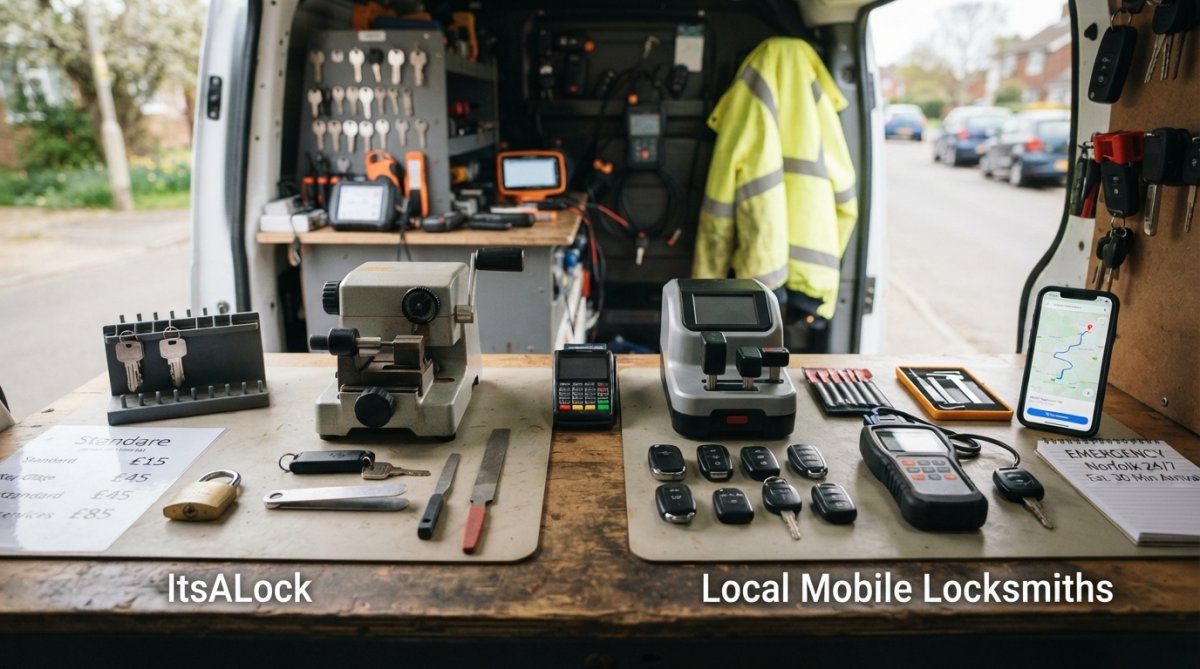
 comparison
ItsALock vs Local Mobile Locksmiths: Which Serves You Best?
Table of Contents
- What Sets Mobile Locksmiths Apart from National Platforms
- How to Verify a Locksmith's Credentials Before Booking
- Auto Locksmith Call-Out Fees: What You'll Actually Pay
- Response Times and 24-Hour Availability Compared
- Finding a Mobile Auto Locksmith Near You: What to Look For
- On-Site Key Programming: Technical Capability and Limitations
- Avoiding Locksmith Scams: A Verification Checklist
- Frequently Asked Questions
Last Updated: September 3, 2026
What Sets Mobile Locksmiths Apart from National Platforms
When your car key snaps at midnight or you're locked out in a car park, the difference between a mobile locksmith and a national platform becomes immediately clear. Mobile locksmiths operate as independent tradespeople who come directly to your location with diagnostic tools and key programming equipment. National platforms function as intermediaries that connect you to available technicians through an app or phone system, adding coordination delays.
The core distinction lies in accountability. A mobile locksmith you call directly has their reputation tied entirely to your experience. They answer their own phone, manage their own schedule, and stand behind their work personally. National platforms distribute responsibility across multiple parties, creating a chain of accountability rather than a direct commitment.
Mobile locksmiths specialise in automotive work, building deep expertise with transponder keys, immobiliser systems, and diagnostic tools. National platforms often work with generalist locksmiths handling everything from house locks to vehicles, meaning automotive expertise varies significantly.
Response time reflects this structural difference. A local mobile locksmith can arrive in 20-40 minutes because they're already positioned nearby. National platforms coordinate across wider areas, meaning your assigned technician might be 45 minutes away even if someone closer is available.
Cost transparency differs too. A mobile locksmith quotes you upfront. National platforms often quote a base rate, then add call-out fees, service charges, and other line items appearing on your invoice after work is done. Mobile Keys Norfolk operates with straightforward on-site service and 24/7 availability, eliminating coordination delays and hidden fees.
How to Verify a Locksmith's Credentials Before Booking
Before handing over your car keys, verify the locksmith is legitimate. This prevents fraud and protects your vehicle from damage or theft.
Start by confirming they operate a registered business. Ask for their business name and registration number, then verify it on Companies House. A legitimate tradesperson has this information immediately available. Next, check for trade association membership. The Master Locksmiths Association maintains directories of vetted members, showing the locksmith has submitted to industry standards.
Ask about their diagnostic equipment specifically. A professional auto locksmith carries tools for reading vehicle immobiliser systems and programming transponder keys. Request details: What diagnostic equipment do they carry? How do they verify they can program your specific vehicle model before arriving? Genuine capability means precise answers.
Insurance and guarantees matter. A reputable locksmith carries public liability insurance covering damage to your vehicle during work. Ask to see proof before they begin. They should guarantee their work, typically 12 months on keys and repairs.
Check online reviews for patterns rather than single reviews. Multiple recent complaints about the same issue (overcharging, damage, no-show) suggest a real problem. Pay attention to reviews mentioning specific details: "arrived on time," "diagnosed the immobiliser issue correctly," "explained the work clearly."
Finally, verify their local knowledge. A mobile locksmith genuinely operating in your area will know the geography and common vehicle models. When you call, ask how long they typically take to reach your location.
Auto Locksmith Call-Out Fees: What You'll Actually Pay
Call-out fees cover travel time, fuel, and diagnostic work. Typical fees vary depending on distance and time of day, with after-hours and weekend work commanding premium rates. Some locksmiths include the call-out fee in the final invoice only if work proceeds; others charge it regardless.
Service costs vary by what you need. Key cutting costs less than key programming, which involves specialist equipment and time. A lost car key replacement typically costs more than a broken key replacement because the locksmith must program the new key to sync with your vehicle's security system.
Mobile locksmith pricing is generally more transparent than dealership pricing. You'll typically receive a quote before work begins. Dealerships often refuse to quote until diagnosis, giving them flexibility to charge afterward. Mobile locksmiths compete on price and reputation, so they tend to quote competitively upfront.
Some locksmiths offer no call-out fee if you proceed with the work, absorbing the diagnostic cost into the service price. Others charge a fixed call-out fee regardless. Ask which model applies when you call.
Time of day affects pricing substantially. A 2 p.m. call-out on a Tuesday costs less than a 2 a.m. emergency on a Sunday. Emergency and after-hours work justifies premium pricing because the locksmith is on-call.
Response Times and 24-Hour Availability Compared
Response time is where mobile locksmiths demonstrate their primary advantage. A mobile locksmith operating locally can reach you in 20-40 minutes (bls.gov). National platforms coordinate across wider regions, meaning your assigned locksmith might be 45-60 minutes away.
24-hour availability is standard among professional mobile locksmiths. Unlike dealerships that close at 5 p.m., a mobile locksmith answers calls at midnight or 3 a.m. This availability is essential for people who lose keys while away from home or experience lockouts outside business hours.
However, response time varies by location. Rural areas far from the locksmith's base see longer arrival times. Urban and suburban areas see faster responses because locksmiths cluster in populated zones. When you call, ask the locksmith their typical response time to your specific location.
Mobile Keys Norfolk operates 24/7 with a 30-minute arrival target across Norfolk. This commitment is possible because they're positioned locally and available round-the-clock. National platforms cannot guarantee this because they're managing technicians across multiple regions.
Weather and traffic affect actual response times. A locksmith quoting 30 minutes in clear conditions might take 45 minutes during heavy rain or rush hour. Legitimate locksmiths acknowledge this variability.
Finding a Mobile Auto Locksmith Near You: What to Look For
Locating a reliable mobile auto locksmith requires more than a Google search. Start with trade association directories. The Master Locksmiths Association maintains a searchable list of members by region. These locksmiths have undergone vetting and submitted to complaints procedures.
Google Maps and local business listings come next. Filter for "auto locksmith" or "mobile locksmith" and look for independent operators with local addresses and established review histories. National platforms often appear at the top due to larger marketing budgets, but they're not necessarily better.
Ask for recommendations from your vehicle manufacturer's dealership or your breakdown cover provider (AA, RAC, Green Flag). They vet providers before including them in their networks.
When you find candidates, call them directly. A mobile locksmith should answer their own phone or have a voicemail promising a callback within reasonable time. If you reach an automated system or call centre, you're likely dealing with a platform rather than a local operator. Ask specific questions: How long have they been operating locally? What diagnostic equipment do they carry? Can they handle your vehicle model?
Check their online presence for consistency. A legitimate mobile locksmith has a website or business profile with the same phone number, address, and business name across all platforms. Cross-reference their address on Google Maps; a genuine mobile locksmith should have a real location.
On-Site Key Programming: Technical Capability and Limitations
Modern vehicles use immobiliser systems that prevent the engine from starting unless the key's electronic chip matches the vehicle's security system (nhtsa.gov). The key must be programmed to communicate with your vehicle's immobiliser.
A mobile locksmith with genuine capability carries diagnostic equipment that reads your vehicle's immobiliser system and programmes new keys to match. Professional-grade diagnostic tools cost hundreds or thousands of pounds, so locksmiths who invest in them are serious operators (peer-reviewed research).
However, not all vehicles allow on-site programming. Some modern luxury vehicles and high-security systems require dealer-level access. A competent mobile locksmith will tell you upfront if your vehicle falls into this category.
Transponder keys are programmable on-site by a mobile locksmith with the right equipment. Key fobs with remote locking functions are also programmable on-site in most cases. Keyless entry systems vary; some allow on-site reprogramming, others require dealership intervention. Ask your mobile locksmith about your specific vehicle and key type before they arrive.
The advantage of on-site programming is speed and cost. You get a working replacement key without towing your vehicle to a dealership. A mobile locksmith's honesty about limitations is a sign of professionalism.
Avoiding Locksmith Scams: A Verification Checklist
Locksmith fraud is common enough that you should approach any locksmith call with healthy scepticism. Scammers exploit the urgency of lockouts and lost keys.
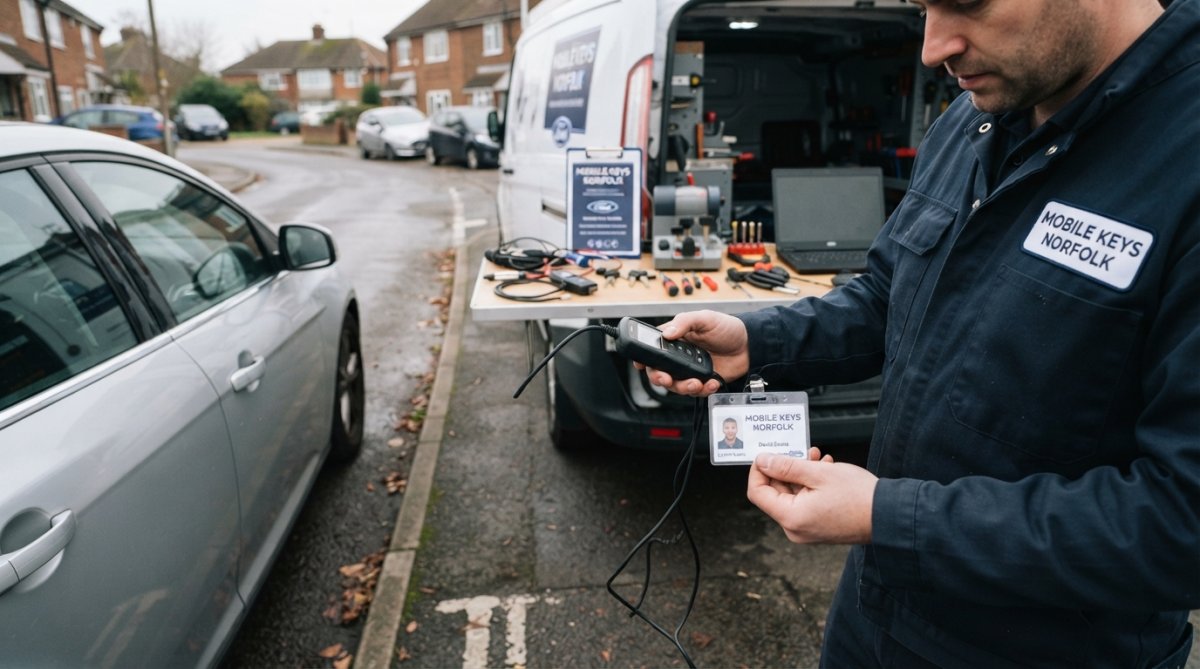
The most common scam involves a bait-and-switch on pricing. A caller quotes £50, then the technician arrives and claims the job is more complex, demanding £200 or more. Protect yourself by getting the quote in writing (text or email) before the locksmith departs to your location.
Another scam involves intentional damage. A dishonest locksmith damages your door lock during entry, then charges separately for lock replacement. Prevent this by photographing your lock before the locksmith arrives and asking them to do the same.
Credential fraud is harder to spot but serious. Some scammers claim trade association affiliation they've never joined or provide fake insurance documents. Verify credentials independently by calling the trade association directly and confirming membership numbers.
Avoid locksmiths who demand cash-only payment or payment upfront via bank transfer or cryptocurrency. Legitimate locksmiths accept card payment after work is completed.
Watch for vague descriptions of their process. A competent locksmith explains what they're doing: "I'm connecting to your diagnostic port to read the immobiliser system." If they're evasive, they may not have the expertise they're claiming.
Check their vehicle. A professional mobile locksmith operates from a clearly marked vehicle with their business name, phone number, and credentials visible. Ask to see their ID and business documentation.
Here's a verification checklist:
- Confirmed their business is registered (Companies House check completed)
- Verified trade association membership independently
- Received written quote via text or email before they departed
- Confirmed their vehicle displays business name and contact details
- Seen their ID and insurance documentation
- Photographed your lock's condition before work began
- Confirmed they accept card payment (not cash-only)
- Verified they carry diagnostic equipment appropriate for your vehicle model
- Asked about their guarantee and received it in writing
Choosing between a national platform and a local mobile locksmith depends on your priorities. If you value response time, direct accountability, and transparent pricing, a mobile locksmith operating locally offers clear advantages. You reach the person who will do the work, receive a straightforward quote, and benefit from their local knowledge and 24/7 availability.
For genuine emergencies where speed matters most, a local mobile locksmith's 30-minute arrival target and immediate accountability make the difference between a quick resolution and hours of frustration.
When you need a replacement key or face a lockout, call Mobile Keys Norfolk on 07399 583760 for rapid on-site assistance. Our 24/7 availability and 30-minute arrival commitment mean you're never left stranded, and our transparent pricing ensures no surprise charges after the work is complete.
Frequently Asked Questions
Q: How do I know if a mobile locksmith is reputable?
A: Check for trade association membership, ask for proof of public liability insurance, and verify they have a physical business address and professional contact details. Request references from previous customers and confirm their vehicle entry techniques are non-destructive. Legitimate mobile locksmiths display transparent pricing upfront and won't pressure you into payment before work is complete. A reputable technician will also have visible identification and use professional diagnostic tools rather than improvised methods.
Q: What is the average auto locksmith call-out fee in the UK?
A: Call-out fees vary by region and service complexity. Some independent mobile locksmiths charge no call-out fee but recover costs in the service price, whilst others apply a separate charge. National platforms may quote differently based on your location and time of day. Always request a fixed quote before work begins to avoid surprise charges. Pricing depends on your vehicle model, key type, and whether you need on-site diagnostics.
Q: What should I look for in a mobile auto locksmith service?
A: Prioritise 24-hour availability and documented response times. Verify they offer on-site key cutting and programming for your vehicle make and model, and ask whether they carry diagnostic tools to confirm immobiliser compatibility. Check for trade association credentials, public liability insurance, and transparent pricing without hidden charges. Read customer reviews specifically mentioning non-destructive entry techniques and warranty on replacement keys. Confirm they can handle your vehicle's security system, whether it's a traditional transponder key or a modern keyless entry system.
Q: Can a mobile locksmith actually program my car's smart key on-site?
A: Yes, experienced mobile locksmiths carry on-site diagnostic tools and programming equipment capable of handling most transponder keys and keyless entry systems. However, some newer or high-security vehicle models may require manufacturer-specific equipment that only dealerships possess. Before booking, describe your vehicle's year, make, and model so the technician can confirm whether they have the necessary diagnostic tools. They should ask about your key type and immobiliser system to assess feasibility. If on-site programming isn't possible, they'll advise you upfront rather than wasting your time.
This article was written using GrandRanker