 how-to
Emergency Car Key Cutting for EVs: A How-To
Table of Contents
- Why Emergency Car Key Cutting for EVs Differs from Petrol Cars
- Step-by-Step: Getting Your Lost Electric Car Key Replaced On-Site
- Lost Electric Car Key Replacement: What the Process Actually Involves
- EV Key Fob Programming Cost: Understanding Your Options
- Common Mistakes to Avoid During an Emergency Lockout
- Key Fob Battery Troubleshooting: When It's Not Lost, Just Dead
- Insurance and Warranty Implications for EV Key Replacement
- Frequently Asked Questions
Last Updated: September 2, 2026
Why Emergency Car Key Cutting for EVs Differs from Petrol Cars
Electric vehicles require a fundamentally different approach to emergency car key cutting than traditional petrol cars. Your EV key fob communicates with multiple systems simultaneously: the immobilizer that prevents unauthorised engine start, the proximity sensor that detects when you're near the vehicle, and the keyless entry system that unlocks doors wirelessly. When you lose your car keys, you're losing access to encrypted security protocols that took engineers years to develop.
Most standard locksmiths fall short here. A traditional locksmith can cut a key blade and might programme a basic transponder chip, but EV key systems demand dealer-level software and diagnostic equipment. Mobile auto locksmith services with proper training can handle this on-site, without forcing you to wait days for a dealership appointment or pay inflated replacement costs.
Transponder chips and immobilizer systems in electric vehicles
Transponder chips are tiny radio-frequency identification devices embedded inside your key fob. When you insert the key into the ignition or press the start button, the car's immobilizer system sends a signal to the chip. If the chip responds with the correct encrypted code, the vehicle starts. If not, the engine remains locked.
Electric vehicles use more advanced versions of this technology than older petrol cars. The encryption is stronger, the pairing process more rigorous, and the synchronisation between key and vehicle more precise. When you need emergency car key cutting for an EV, the technician must not only cut the blade accurately but also programme the transponder chip to match your specific vehicle's ECU (engine control unit).
The immobilizer system in modern EVs communicates with the battery management system, the motor controller, and the onboard diagnostics. A key that hasn't been properly synchronised with these systems won't just fail to start the vehicle, it might trigger security alerts or lock you out of charging functions.
Key fob battery and proximity sensor requirements
EV key fobs contain a small battery, typically a CR2032 or similar coin-cell battery that lasts 3-4 years under normal use (peer-reviewed research). When this battery dies, your fob stops communicating with the vehicle entirely. You can't unlock the doors, and if your spare key is also dead or missing, you're genuinely stranded.
The proximity sensor inside the fob transmits a low-power radio signal that tells your EV you're within range. Modern EVs use this signal to unlock doors automatically when you approach and to enable the start button when you're inside. During emergency car key cutting, a professional locksmith will test the new key fob's battery and proximity sensor function before handing it over.
Step-by-Step: Getting Your Lost Electric Car Key Replaced On-Site
Step 1: Contact a mobile auto locksmith 24/7 service
When you've lost your electric car key, don't call the dealership. A dealership will tell you to tow the vehicle in, wait 5-7 business days, and pay for a replacement key. A mobile auto locksmith 24/7 service arrives within 30-60 minutes and completes the job on-site.
Call a mobile auto locksmith that specialises in EV key programming. Mobile Keys Norfolk, for example, operates 24/7 and guarantees a 30-minute arrival time across the region. When you call, have your vehicle registration number and proof of ownership ready. Ask directly: "Do you programme EV key fobs on-site?" If they hesitate, call someone else.
Step 2: Verify your vehicle ownership and identity
Before any work begins, the locksmith must verify that you actually own the vehicle. Bring your driving licence, vehicle registration document (V5C), and proof of address. Some locksmiths will also ask for your vehicle's VIN (Vehicle Identification Number), which appears on the dashboard, registration papers, and insurance documents.
This verification step is essential security. Once verified, the locksmith will access your vehicle using non-destructive entry techniques. For EVs, this typically means using a slim jim or air wedge to gently open the door without damaging the weatherstripping or paint.
Step 3: Key blade cutting and transponder programming on-site
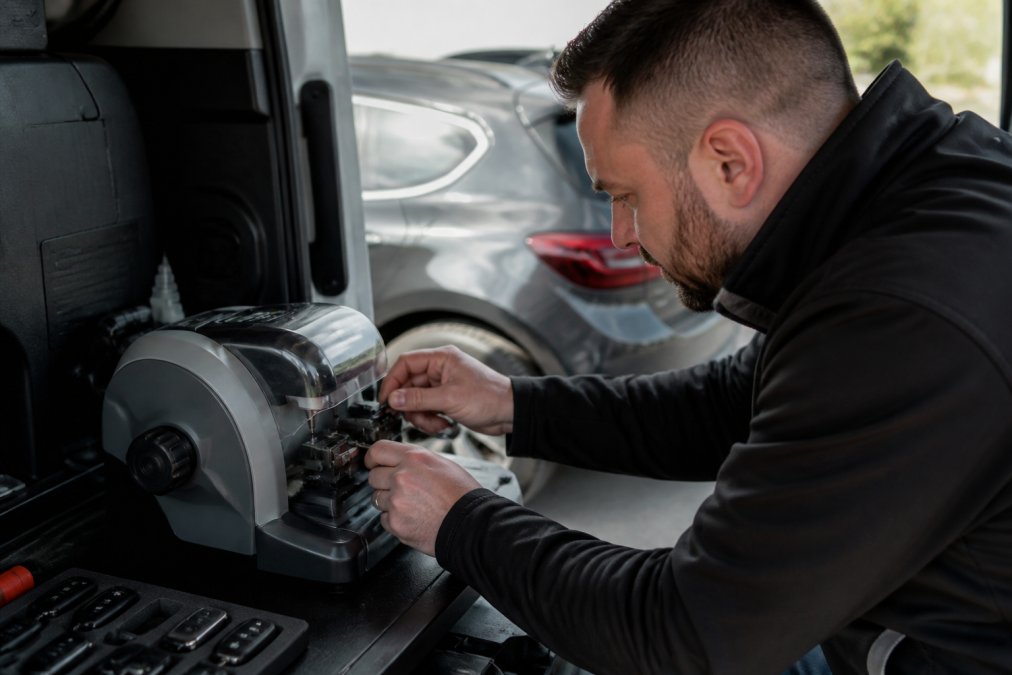
The locksmith will cut a new key blade that matches your vehicle's ignition cylinder. Modern key cutting machines are precise enough to duplicate a blade within microns of the original.
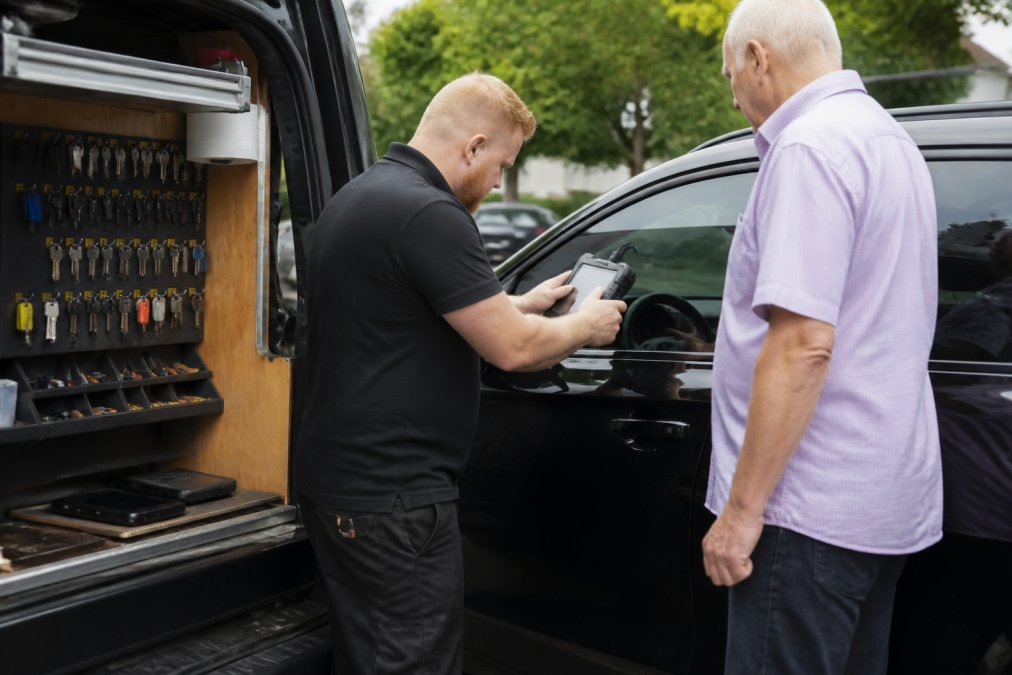
Next comes transponder programming. The locksmith connects a diagnostic device to your EV's OBD-II port. This device communicates with the vehicle's ECU and tells it to accept a new transponder code. The blank key fob is then programmed with that code. This entire process takes 15-20 minutes for most EV models.
The quality of the diagnostic equipment matters enormously. Professional locksmiths invest in manufacturer-approved software and hardware, the same tools dealerships use.
Step 4: ECU synchronisation and testing
Once the transponder is programmed, the locksmith performs ECU synchronisation. This links the new key to your vehicle's computer system. The ECU now recognises this new transponder code as legitimate and will allow the vehicle to start.
The locksmith then tests the key by inserting it into the ignition and verifying that the immobilizer light turns off and the engine cranks. For keyless entry systems, they'll test the proximity sensor by approaching the vehicle with the fob. If anything fails during testing, the locksmith troubleshoots on the spot before you're charged.
Lost Electric Car Key Replacement: What the Process Actually Involves
Non-destructive entry techniques to access your vehicle
When you're locked out of your EV, the locksmith must gain entry without damaging the vehicle. The most common non-destructive entry technique is the slim jim, a flat metal tool that slides between the window and weatherstripping to manipulate the door lock mechanism. For newer EVs with electronic locks, the locksmith might use an air wedge combined with a long-reach tool to press the unlock button.
A skilled locksmith knows vehicle variations and adjusts their technique accordingly. They'll never use force; force means damage, and damage means liability. The entire non-destructive entry process typically takes 5-10 minutes.
Diagnostic equipment needed for smart key technology
Smart key technology in EVs is far more complex than basic transponder chips in older cars. Your EV's smart key communicates with the vehicle's network via encrypted radio signals.
To programme a new smart key, the locksmith needs diagnostic equipment that can connect to the vehicle's OBD-II port, access the ECU's memory and security parameters, generate new encryption codes that match your specific vehicle, and synchronise those codes with the immobilizer system. Professional diagnostic devices cost £2,000-5,000 and require regular software updates (sae.org). When you call a mobile auto locksmith 24/7 service, verify that they have equipment specifically designed for your EV brand.
Security encryption and dealer-level software requirements
The encryption protecting your EV's key system is military-grade, designed to prevent key cloning and unauthorised access. The only way to create a legitimate replacement key is to work within the manufacturer's security framework.
The locksmith must have access to dealer-level software that communicates with your vehicle's manufacturer database. For a Nissan Leaf, they need Nissan's diagnostic software. For a Tesla, they need Tesla's authentication protocols. Mobile Keys Norfolk uses manufacturer-approved software.
EV Key Fob Programming Cost: Understanding Your Options
Why mobile locksmith pricing beats dealership rates
A dealership will charge you for a replacement EV key fob, plus labour costs for programming. The total bill often exceeds what a mobile locksmith charges.
A mobile auto locksmith 24/7 service typically charges less than dealership prices. The reason is efficiency. A dealership has overhead costs: retail locations, administrative staff, warranty obligations. A mobile locksmith operates lean, with lower fixed costs and faster turnaround times. You don't lose a day of work waiting for a tow truck or sitting in a dealership waiting room, and you don't pay towing fees.
Choose a reputable mobile locksmith with professional-grade equipment and manufacturer-approved software, not bargain-basement tools.
Factors that affect your replacement cost
Several variables influence the final cost of emergency car key cutting for an EV:
Vehicle model and year. Newer EVs with advanced security systems cost more to programme than older models.
Number of keys needed. If you've lost one key and still have a spare, programming a replacement is straightforward. If you've lost both keys, the locksmith must reprogram the entire key system.
Time of day. A 24/7 mobile locksmith might charge a premium for calls outside business hours.
Complexity of access. If your EV is parked in a secure location, access is simple. If it's in a multi-storey car park or on a busy street, the job might take longer.
Warranty and guarantees. A locksmith offering a warranty on the new key will charge more than one offering no guarantee. The warranty is worth the extra cost.
When you call for a quote, be transparent about your situation. Reputable services like Mobile Keys Norfolk offer fixed pricing, so you know the cost before work begins.
Common Mistakes to Avoid During an Emergency Lockout
Don't attempt to force entry yourself. Breaking a window or forcing a door lock causes damage that costs more to repair than the locksmith service itself.
Don't call a residential locksmith. A locksmith trained only in house locks won't have the diagnostic equipment or software needed for EV key programming.
Don't trust online marketplaces for key cutting. Services like KeyMe offer kiosk-based key duplication, but they can't programme transponders or smart keys.
Don't assume all mobile locksmiths are equal. Always verify that they specialise in electric vehicles before booking.
Don't ignore your spare key. If you have a spare key, keep it somewhere safe, not in the car. A spare key is your insurance policy against losing both keys.
Don't wait until you're desperate. If you've lost a key, contact a mobile auto locksmith immediately. Booking proactively gives you options; waiting until you're locked out limits them.
Key Fob Battery Troubleshooting: When It's Not Lost, Just Dead
Before assuming you need emergency car key cutting, diagnose whether your key fob is simply dead. A dead battery is the most common cause of key fob failure, and it's the cheapest fix.
Signs of a dead battery: Your key fob doesn't unlock the doors, the unlock button feels unresponsive, or the proximity sensor doesn't work when you approach the vehicle.
How to test: Press the unlock button while standing very close to the vehicle. If nothing happens, the battery is likely dead.
How to replace the battery: Most EV key fobs use a CR2032 or CR2025 coin-cell battery, available at any supermarket for £2-5. Look for a small slot or button on the fob's edge to open the casing. Remove the old battery, note its orientation, and insert the new battery in the same orientation.
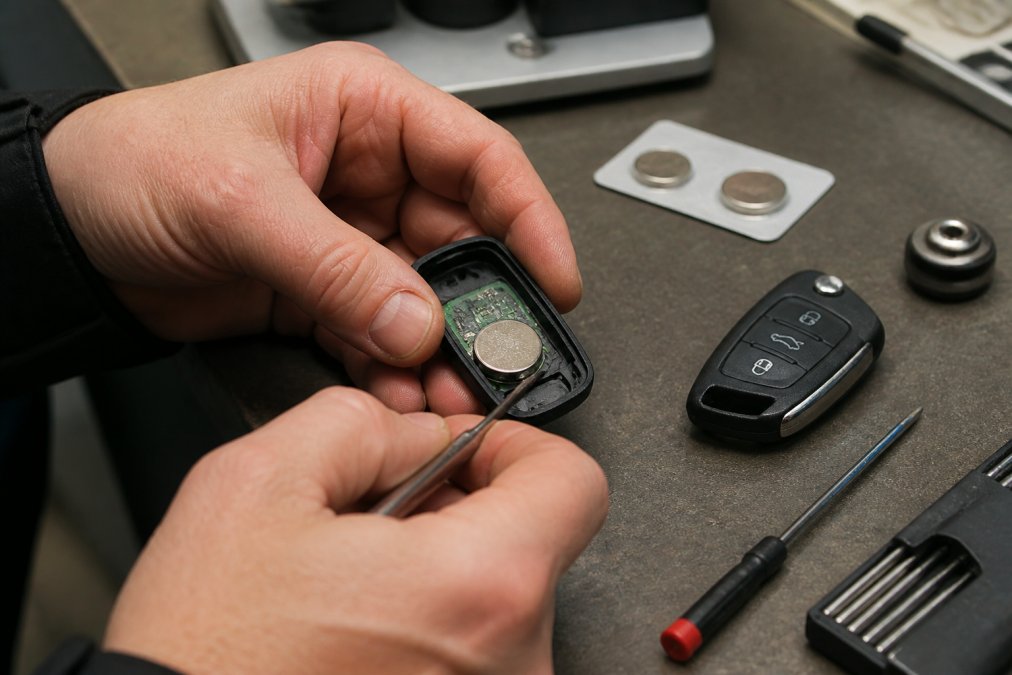
When to call a locksmith: If you've replaced the battery and the fob still doesn't work, the problem is the circuitry or transponder chip. This requires professional diagnosis. If the fob has been damaged (dropped, water-damaged, or physically broken), a new battery won't fix it.
Insurance and Warranty Implications for EV Key Replacement
Does your car insurance cover lost keys? Most standard car insurance policies do not cover lost or stolen keys (fca.org.uk). Check your specific policy, but the standard answer is no. This is why having a spare key is crucial.
Some premium insurance policies include roadside assistance that covers lockouts. However, they'll typically use their preferred provider, which might not offer the fastest service. Calling a mobile auto locksmith directly is often quicker.
Warranty on replacement keys: Reputable mobile locksmiths offer warranties on the keys they programme. Mobile Keys Norfolk guarantees that a newly programmed key will work correctly.
What about roadside assistance memberships? Services like the AA or RAC offer memberships that include lockout coverage for £50-100 annually. However, they typically have response times of 30-60 minutes, whereas a dedicated mobile auto locksmith service guarantees faster arrival.
The bottom line: Invest in a spare key and store it securely. If you lose both keys, contact a mobile auto locksmith immediately rather than waiting for dealership appointments or insurance claims to process.
When you're locked out of your electric vehicle with no spare key, every minute counts. Mobile Keys Norfolk specialises in rapid, on-site emergency car key cutting and programming for EVs across the region. With 24/7 availability and a 30-minute arrival guarantee, we get you back on the road faster than dealerships or generic locksmiths. Our technicians carry manufacturer-approved diagnostic equipment and software, the same tools dealerships use, but without the waiting time or inflated costs. Call 07399 583760 to speak with a specialist who understands EV security systems inside and out.
Frequently Asked Questions
Q: Can a mobile locksmith actually programme an EV key on-site, or do I need to go to the dealership?
A: A qualified mobile locksmith with the right diagnostic equipment can programme most EV keys on-site, including transponder chips, immobiliser systems, and smart key technology. They use dealer-level software and ECU synchronisation tools to match your vehicle's security encryption. This saves you time and cost compared to dealership visits. However, some newer or luxury EV models may require dealership-specific protocols, ask your locksmith upfront whether they support your specific vehicle model.
Q: How long does emergency car key cutting and programming take for an electric vehicle?
A: Most on-site replacements take 30-60 minutes, depending on your vehicle's security system complexity and whether the locksmith needs non-destructive entry to access your car. Key blade cutting is quick; the majority of time goes to transponder programming and ECU synchronisation. Mobile services typically arrive within 30 minutes of your call, so total resolution time is often under two hours from your initial contact.
Q: Why is lost electric car key replacement more expensive than petrol car keys?
A: EV keys contain more sophisticated technology: transponder chips, proximity sensors, and security encryption that require diagnostic equipment and dealer-level software to programme. The key fob also includes a battery and remote unlocking functions. Mobile locksmiths charge more for EV key replacement because the equipment, training, and time investment are significantly higher. However, mobile locksmith costs are still substantially lower than dealership rates, which can be considerably more for the same service.
Q: What should I do if my key fob battery is dead rather than lost?
A: If your key fob is simply unresponsive, the battery may be flat. You can try replacing the small battery inside the fob yourself using a replacement available from supermarkets or online retailers, most take standard coin-cell batteries. If replacement doesn't restore function, the fob may have internal damage or a faulty proximity sensor. Contact a mobile locksmith to diagnose the issue; they can often repair or reprogram the fob on-site rather than requiring a full replacement.
This article was written using GrandRanker