 how-to
Can a Locksmith Cut Keys On-Site? A Complete Guide
Table of Contents
- What On-Site Key Cutting Actually Means
- Types of Keys a Locksmith Can Cut On-Site
- Auto Locksmith Key Programming Tools and Equipment
- How to Program Spare Car Keys On-Site
- Time Taken to Cut and Program Car Keys
- What to Expect from a Mobile Locksmith Visit
- Security Verification and Proof of Ownership
- Equipment Limitations: What Cannot Be Cut On-Site
Last Updated: August 19, 2026
What On-Site Key Cutting Actually Means
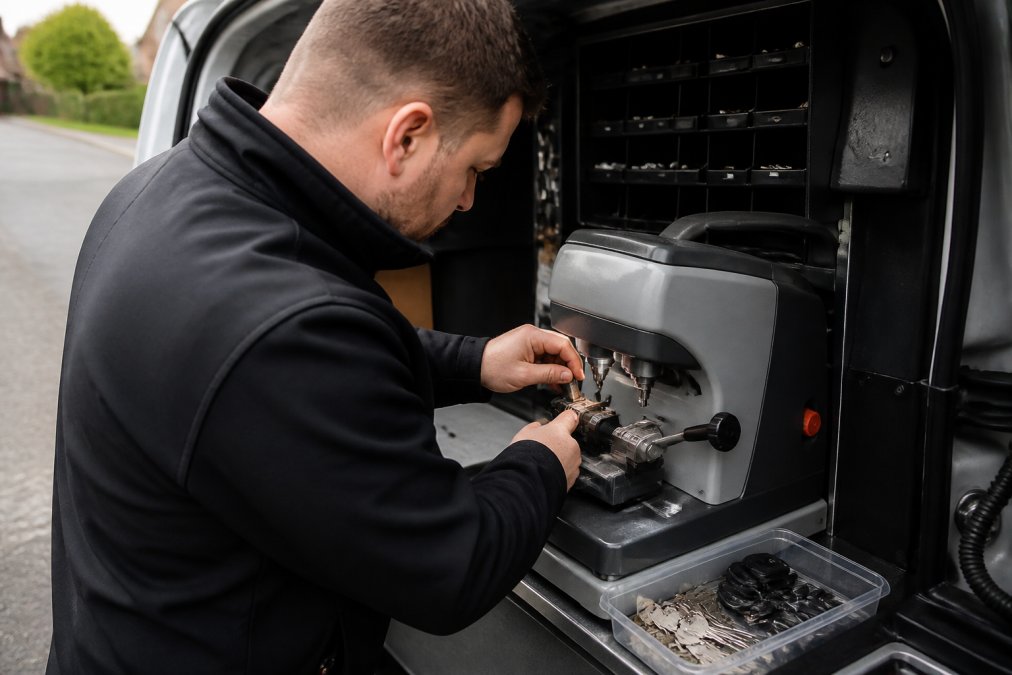
On-site key cutting is the service of cutting and programming replacement keys at your location, home, workplace, or roadside, rather than visiting a locksmith's shop or dealership. A mobile locksmith arrives with specialised equipment and completes the entire process where your vehicle is parked.
This differs fundamentally from traditional approaches. Dealerships require you to tow your car or drive it in during business hours. Independent locksmith shops require a visit to their premises. A mobile locksmith cuts keys onsite, meaning you stay put and the professional comes to you. For drivers stranded by a lost key, broken key fob, or malfunctioning transponder system, this eliminates costly towing and lengthy waiting periods.
The process typically involves three steps: verifying your identity and ownership, selecting the correct key blank and programming code for your vehicle, then using precision cutting and programming equipment to create a fully functional replacement. Modern vehicles, especially those from 2010 onwards, often have transponder keys or smart fobs that require electronic programming, not just mechanical cutting.
Types of Keys a Locksmith Can Cut On-Site
Standard door keys and residential keys
Standard mechanical keys for homes and offices require only physical cutting against a key blank, no electronic programming. A mobile locksmith carries multiple key blank profiles to match common residential locks. Cutting takes only a few minutes: the locksmith examines your original key or lock, identifies the correct blank, and uses a precision cutting machine to match the profile. The result works instantly once cut.
However, many residential properties now use electronic locks or keyless entry systems. These cannot be addressed with a standard key cutting machine alone. A mobile locksmith can still help by reprogramming the lock's access codes rather than cutting a physical key.
Car keys and transponder keys
Car keys are far more complex than residential keys. Modern vehicles use transponder keys (chip keys or immobiliser keys), which contain a small electronic chip that communicates with your vehicle's immobiliser system. Without the correct transponder code, the engine will not start, even if the physical key fits the ignition.
A locksmith cutting car keys onsite must handle both mechanical cutting and electronic programming. The locksmith cuts the physical blade to match your vehicle's ignition cylinder, then uses specialist programming equipment to sync the transponder chip with your car's immobiliser by connecting to your vehicle's onboard diagnostic system.
Transponder keys became standard in the mid-1990s. If your car is from 2000 onwards, it almost certainly uses a transponder key. Newer vehicles (2010+) often use smart keys or keyless fobs, which communicate wirelessly and may include panic buttons, trunk release, or remote locking features. Programming a smart key requires the locksmith to have access to the correct programming protocol for your specific make, model, and year.
Security keys and restricted blanks
Some vehicles and high-security properties use restricted key blanks with patented designs that only authorised locksmiths can obtain. A locksmith cutting restricted blanks must be registered with the key manufacturer or have a direct relationship with the brand. Some vehicles use Ford, BMW, or Mercedes-specific blanks that are not freely available. High-security locks require precision cutting equipment that standard key machines cannot achieve, with tighter tolerances and more complex profiles.
Auto Locksmith Key Programming Tools and Equipment
A mobile locksmith's van is equipped with specialised tools including a precision key-cutting machine (manual or CNC-automated), transponder programming devices, diagnostic scanners, and key blanks in dozens of profiles.
The key-cutting machine is the most visible tool. Modern machines use laser or mechanical cutting to duplicate the exact profile of your original key or cut a blank to match your lock's specifications. CNC machines are more accurate and faster than manual machines, particularly for complex profiles and restricted blanks.
Transponder programming equipment is equally critical. This includes dedicated programmers for specific vehicle makes and universal programmers that work across multiple brands. These devices communicate with your vehicle's immobiliser system, read the existing key's code, and programme a new key to match.
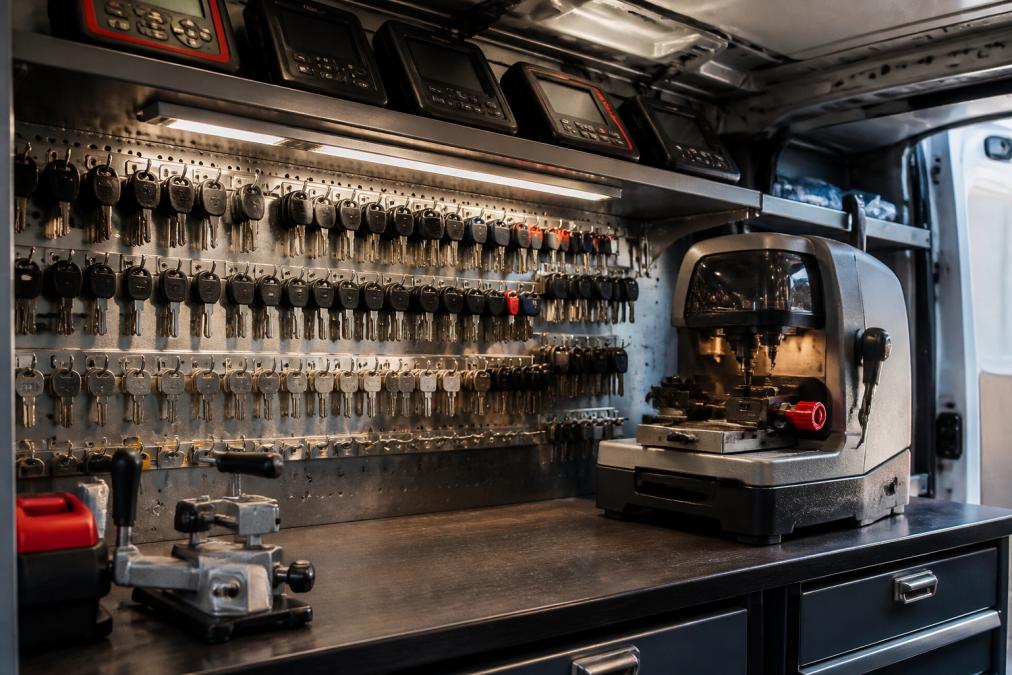
Diagnostic scanners access your vehicle's computer system and retrieve the immobiliser code, particularly important for newer vehicles where the code cannot be obtained from a physical key. Mobile locksmiths carry 50 to 100+ different key blank profiles covering the most common domestic and vehicle locks, allowing them to cut keys onsite without delays.
How to Program Spare Car Keys On-Site
Programming a spare car key on-site follows a logical sequence. First, the locksmith verifies your identity and proof of vehicle ownership, a critical security step that prevents unauthorised key duplication. You'll typically need to provide your driving licence and vehicle registration document.
Second, the locksmith identifies your vehicle's immobiliser code. If you have one original key, the programmer reads the code from that key's transponder chip. If you've lost all keys, the locksmith connects a diagnostic scanner to your vehicle's onboard diagnostic port and retrieves the code directly from the immobiliser module.
Third, the locksmith selects the correct key blank for your vehicle based on your car's make, model, year, and immobiliser system. Fourth, the locksmith uses the programming device to sync the new key with your vehicle's immobiliser, typically by inserting the new key into the ignition and turning it to specific positions while the programmer uploads the immobiliser code. Finally, the locksmith tests the new key in your ignition, door locks, and boot to confirm full functionality.
Time Taken to Cut and Program Car Keys
The time to cut and programme car keys on-site varies significantly based on the key type and your vehicle's system. For a standard residential key, cutting takes only 5 to 10 minutes. For a transponder car key with an original key present, programming typically takes 15 to 30 minutes. If you've lost all your keys, the time increases to 30 to 45 minutes, as the locksmith must access your vehicle's onboard computer to retrieve the immobiliser code.
Certain vehicle makes add complexity. Luxury brands (BMW, Mercedes, Audi) and some Japanese manufacturers (Toyota, Honda) use proprietary immobiliser systems that require specialised programming devices. Weather and location also affect timing, working on a roadside in rain or darkness takes longer than working in a driveway, and difficult-to-access diagnostic ports require extra time.
What to Expect from a Mobile Locksmith Visit
When a mobile locksmith arrives, the first step is verification. Expect to provide your driving licence and vehicle registration document. This is a critical security measure that prevents theft and unauthorised duplication. A professional locksmith will ask for this documentation without hesitation.
Next, the locksmith will inspect your vehicle and discuss your specific needs. If you have an original key, they'll examine it to understand the key type and immobiliser system. If you've lost all keys, they'll ask about your vehicle's make, model, year, and any unusual features. This conversation helps the locksmith determine whether they have the correct equipment on-site.
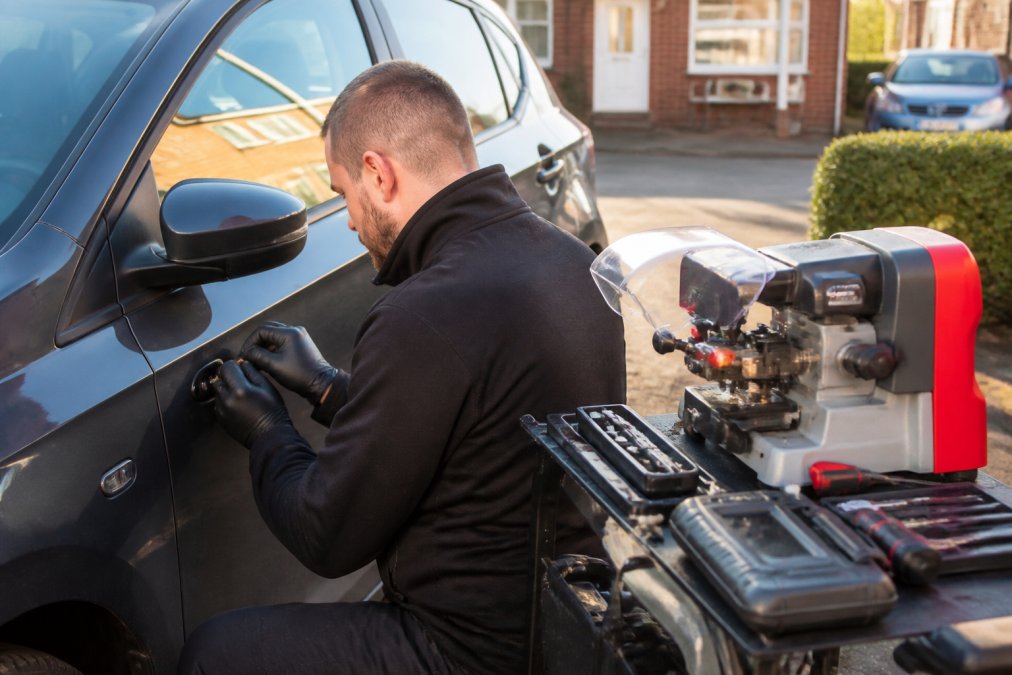
The locksmith will then retrieve your vehicle's immobiliser code. If you have an original key, the programmer reads the transponder chip. If not, the locksmith connects a diagnostic scanner to your vehicle's onboard diagnostic port, a non-invasive process that does not damage your vehicle.
Once the code is retrieved, the locksmith selects the correct key blank, cuts the physical key, and programmes the transponder chip. You'll see the locksmith insert the new key into your ignition and follow a specific sequence of turns or button presses. Finally, the locksmith tests the new key by turning the ignition to confirm the engine starts, operating the door locks and boot, and verifying any additional features.
Security Verification and Proof of Ownership
Security verification is a non-negotiable part of any legitimate locksmith service. Before cutting or programming a key, a professional locksmith will ask for proof of ownership and identity. Acceptable proof of ownership includes your vehicle registration document (V5C), a recent insurance document, or a finance agreement. Your driving licence confirms your identity.
Some locksmiths also verify your details against the DVLA records or insurance databases, adding an extra layer of protection. If there's a mismatch between your name and the vehicle's registered owner, a professional locksmith will decline the job or ask for additional documentation explaining the discrepancy.
Mobile Keys Norfolk, like all reputable mobile locksmiths, follows these verification protocols strictly. A locksmith will also note whether your car shows signs of forced entry or damage. If your vehicle appears to have been broken into, a professional locksmith may decline the job to avoid facilitating vehicle theft.
Equipment Limitations: What Cannot Be Cut On-Site
Not every key can be cut on-site. The primary limitation is equipment availability. If your vehicle uses a key blank that the locksmith doesn't stock and cannot order quickly, the job may require a return visit.
Certain high-security keys require specialist cutting equipment or access to restricted blank suppliers. Some German luxury vehicles use blanks that only authorised dealers or registered locksmiths can obtain. Keyless smart keys present another limitation, while a mobile locksmith can programme some on-site, others require dealership-level access or manufacturer-specific programming equipment.
Some vehicles have immobiliser systems that only the dealership can access. Certain high-end vehicles and some commercial vehicles use immobilisers that restrict access to dealership cooperation. Weather and environmental conditions also create practical limitations, attempting to programme a key in heavy rain or extreme cold can damage sensitive electronic equipment. Finally, if you've lost all your keys and your vehicle's onboard computer is damaged or malfunctioning, a mobile locksmith cannot retrieve the immobiliser code and you'll need to contact your vehicle's manufacturer or dealership.
Frequently Asked Questions
Can a locksmith cut any type of key on-site?
Most standard keys, car keys, and transponder keys can be cut on-site by a professional locksmith with the right equipment. However, some security keys, restricted blanks, and high-security systems may require additional verification or cannot be cut without proof of ownership. Modern keyless entry systems and some luxury vehicles have limitations depending on the locksmith's programming tools and access to your vehicle's security codes.
How long does it take for a mobile locksmith to cut a replacement key?
Response times vary, but many mobile locksmiths aim for 30-minute arrival at your location. Once on-site, cutting a standard key takes 10-15 minutes, whilst programming a transponder key or car key fob may take 20-45 minutes depending on the vehicle model and the complexity of the security system. Total time on-site typically ranges from 30 minutes to an hour.
How do I know the locksmith can actually program my car's smart key?
Ask the locksmith directly about their experience with your specific vehicle make and model before they arrive. Professional locksmiths carry diagnostic equipment and key programming tools that work with most modern cars, but some high-end or very new vehicles may require dealership-level access. Request confirmation of their capabilities, and reputable locksmiths will be transparent about whether they can handle your car on-site or if you need specialist support.
Do I need to provide proof of ownership for on-site key cutting?
Yes, most professional locksmiths will ask for proof of ownership as a security verification process. This protects you and the locksmith by confirming you have a legitimate right to access the vehicle. Acceptable proof typically includes your vehicle registration document, driving licence, or insurance paperwork. This is standard practice and part of responsible locksmith service.
Locked out or need a replacement key right now? Mobile Keys Norfolk provides expert on-site key cutting and programming across Norfolk. With 24/7 availability and a 30-minute arrival target, we get you back on the road quickly. Our team handles standard keys, transponder keys, smart fobs, and complex immobiliser systems, all without requiring a trip to the dealership. Call 07399 583760 for immediate assistance.
This article was written using GrandRanker