 ultimate-guide
Are Mobile Locksmiths Reliable? How to Spot Rogue Operators
Table of Contents
- Are Mobile Locksmiths Reliable? What You Need to Know
- Rogue Locksmith Red Flags: How to Spot a Scam
- How to Verify a Locksmith's Credentials and Insurance
- Understanding Emergency Locksmith Call-Out Fees UK
- Local Operators vs. Call Centre Services: Which Are More Reliable?
- Questions to Ask Before Hiring a Mobile Locksmith
- How to Check Online Reviews and Social Proof
- Why Reliability Matters When You're Locked Out
Last Updated: August 6, 2026
Are Mobile Locksmiths Reliable? What You Need to Know
Mobile locksmiths can be reliable, but the industry attracts both professional operators and rogue traders who exploit customers in emergency situations. The question isn't whether mobile locksmiths as a category are trustworthy, it's how to identify which ones are.
When you're locked out of your car, you're vulnerable. You need help fast, you may be in an unfamiliar location, and you're unlikely to have time for thorough research. This is precisely the environment where predatory operators thrive. They know you'll pay almost anything to get back on the road, won't check credentials before they arrive, and won't pursue complaints after they've left.
The good news: reliable mobile locksmiths exist and are identifiable. They operate transparently, hold verifiable credentials, carry proper insurance, and quote prices before starting work. At Mobile Keys Norfolk, we understand that trust is earned through consistency, transparency, and genuine expertise. This guide covers what separates legitimate operators from rogue locksmiths and how to verify credentials before handing over your keys or money.
Rogue Locksmith Red Flags: How to Spot a Scam
A rogue locksmith typically operates through call centres that advertise under misleading names, use aggressive pricing tactics, and disappear once payment clears. They rely on the fact that most people don't know what to expect, don't have time to verify anything, and won't pursue complaints afterward.
Price Gouging and Predatory Pricing
The most obvious red flag is a quote that bears no relationship to the work involved. Legitimate mobile locksmiths provide transparent pricing before starting. Rogue operators quote low prices over the phone to secure the job, then inflate costs once you're stranded.
Common predatory tactics include charging separately for call-out fees, diagnostic fees, and actual work, with each component priced at premium rates. You might be quoted £40 for a call-out, then told there's a £30 diagnostic fee, then charged £150 for the service, totalling £220 for work that should cost £80.
The warning sign isn't that pricing seems high; emergency services cost more. The warning sign is that pricing is vague, broken into multiple charges, or quoted differently than the final invoice.
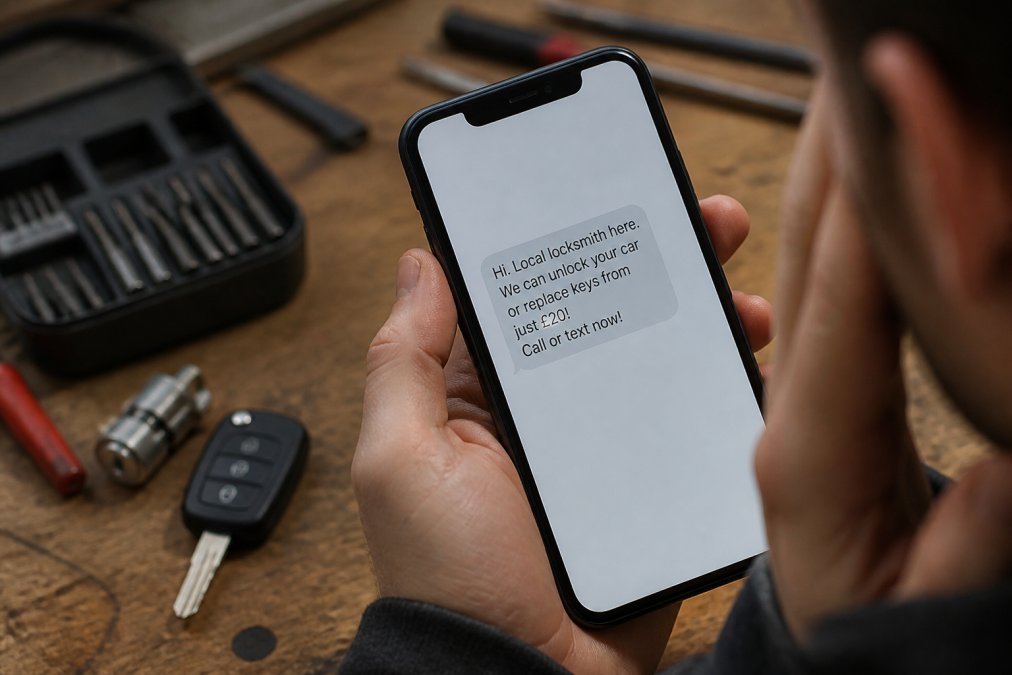
Vague Credentials and No Physical Address
Legitimate mobile locksmiths have a verifiable physical business address, are registered with Companies House, and appear on local business registries. Rogue operators work from call centres with no physical location or list a residential address as their "office."
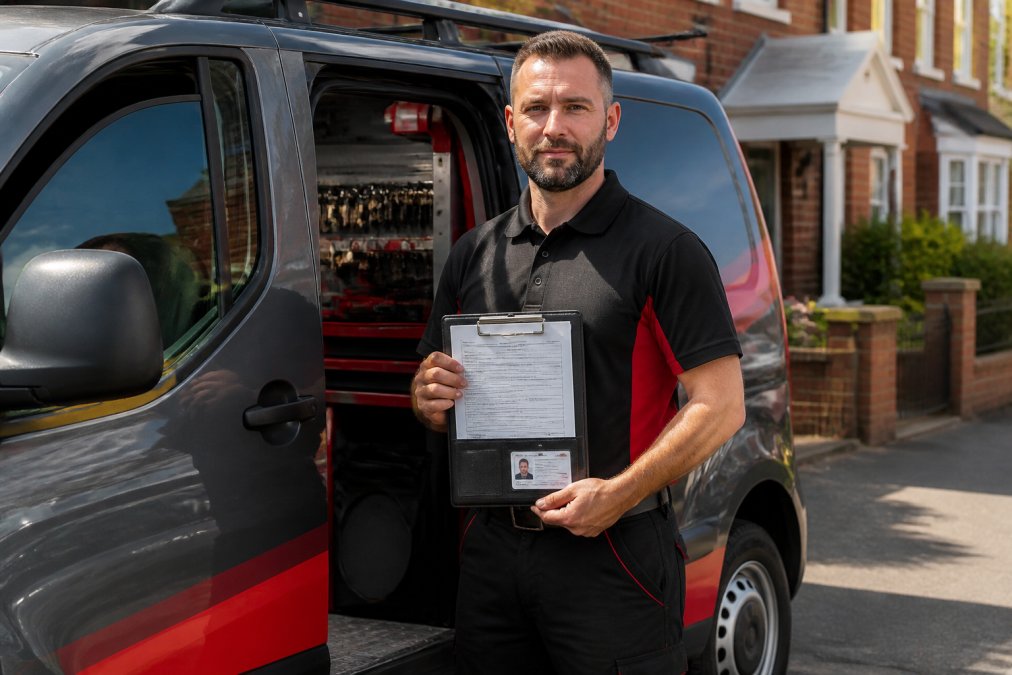
When you ask for credentials, a legitimate locksmith will provide:
- Master Locksmiths Association (MLA) approval status
- Public liability insurance documentation
- DBS (Disclosure and Barring Service) check confirmation
- Business registration number
- Physical business address
A rogue locksmith will be evasive, claim credentials are "on file," or provide documentation difficult to verify.
How to Verify a Locksmith's Credentials and Insurance
Before hiring any mobile locksmith, verify three things: professional accreditation, insurance coverage, and background checks. This takes 10 minutes and eliminates the vast majority of rogue operators.
Check Master Locksmiths Association (MLA) Approved Status
The Master Locksmiths Association is the UK's primary trade body for locksmiths. MLA approved status means the locksmith has passed background checks, maintains professional standards, and operates under a code of conduct.
To verify MLA approval:
- Visit the MLA website and use their approved locksmith search tool
- Enter the locksmith's name or business name
- Confirm the business appears on the approved list
- Check that approval status is current
Do not rely on the locksmith's word or accept a certificate they show you; verify independently through the MLA website. Rogue operators frequently claim MLA approval they don't have.
If a locksmith is MLA approved, they've undergone DBS checks as part of membership requirements, meaning their background has been screened for criminal activity or safeguarding concerns.
Confirm Public Liability Insurance and DBS Checks
Public liability insurance protects you if the locksmith damages your vehicle. A legitimate locksmith carries this as standard. If they won't provide proof, don't hire them.
Ask to see:
- Certificate of Public Liability Insurance (minimum £6 million cover is standard)
- Proof of DBS check (Enhanced level for vehicle access work)
- Professional indemnity insurance (optional but increasingly common)
Request copies via email before arrival. Verify that the insurance certificate is current and covers the specific work you need. Check that the DBS check is recent; anything older than three years should raise questions.
Understanding Emergency Locksmith Call-Out Fees UK
Call-out fees are legitimate, emergency services cost more than standard services. The issue is when they're hidden, inflated, or unclear.
What's Included in a Call-Out Fee
A call-out fee typically covers the locksmith's travel time, vehicle costs, and initial assessment. It's charged whether or not the locksmith can complete the work.
A transparent call-out fee structure looks like this:
- Call-out fee: £40-60 (covers arrival and assessment)
- Service charge: varies based on the work
- Parts (if required): charged at cost plus labour
The call-out fee should be quoted before arrival. If it changes after assessment, that's a red flag.
Why Transparent Pricing Matters
Transparent pricing identifies legitimate operators. A locksmith who quotes clearly, provides written confirmation, and sticks to those quotes demonstrates professionalism. One who quotes low over the phone and inflates costs on-site demonstrates dishonesty.
Before hiring, ask for:
- Total estimated cost (not "starting from")
- Breakdown of call-out fee, service charge, and any parts
- Confirmation that the quote is fixed
- What happens if they can't complete the work
Get this in writing. A text message or email confirmation creates a record and protects you if the final invoice doesn't match the quote.
Local Operators vs. Call Centre Services: Which Are More Reliable?
A local independent locksmith has a reputation to protect in their community. A call centre service has no local accountability.
Call centre services typically dispatch the nearest available technician, who may or may not be qualified, insured, or honest. The call centre takes a cut, incentivizing the technician to inflate costs.
Local operators build reputation through repeat business and word-of-mouth. They have a physical address, are known in their community, and can't disappear without consequences. If they overcharge you, you can walk into their office and complain.
When choosing between a local operator and a call centre service, ask:
- Is there a physical business address in your area?
- How long have they been operating?
- Can you find independent reviews from local customers?
- Are they MLA approved?
If the answer to any of these is "no" or "unclear," you're dealing with a call centre operation, which means your protection is weaker.
Questions to Ask Before Hiring a Mobile Locksmith
The questions you ask before the locksmith arrives determine whether you're hiring a professional or a rogue operator.
-
"What's your total estimated cost, and is it fixed?" A legitimate locksmith provides a firm quote. A rogue operator gives a range or says "it depends."
-
"Are you MLA approved?" If yes, ask for their membership number and verify it on the MLA website before they arrive.
-
"Can you provide proof of public liability insurance?" Ask them to email a copy of their insurance certificate. Verify it's current and covers vehicle work.
-
"Have you had a DBS check?" This is standard for anyone accessing vehicles.
-
"What's your policy if you can't complete the work?" Do they still charge the call-out fee? A legitimate locksmith will have a clear answer.
-
"How long have you been operating?" Longevity signals lower risk.
-
"Can you provide references or customer reviews?" A legitimate locksmith will have verifiable feedback.
How to Check Online Reviews and Social Proof
Online reviews are imperfect but valuable. A locksmith with genuine five-star reviews across multiple platforms is lower risk than one with no reviews or fabricated ones.
Where to check reviews:
- Google Business (most reliable for local services)
- Trustpilot (aggregates reviews across service categories)
- MLA website (if approved)
- Local Facebook groups (candid customer feedback)
- Which? (consumer reports)
What to look for:
- Specific details (reviews mentioning actual work done are more credible)
- Negative reviews (zero negative reviews is suspicious)
- Response to complaints (how does the business respond to criticism?)
- Consistency (do reviews describe the same service quality?)
Red flags:
- All five-star reviews (likely fabricated)
- Identical-sounding reviews (fake)
- No response to negative reviews
- Complaints about hidden costs or inflated pricing
Don't weight a single negative review heavily. Do weight a pattern of complaints about pricing, damage, or dishonesty, that's a warning sign.
Why Reliability Matters When You're Locked Out
When you're locked out of your car, you're vulnerable. You need help immediately, you're stressed, and you're not thinking clearly about verification. This is when rogue locksmiths strike.
A reliable mobile locksmith understands this. They don't exploit your urgency. They provide transparent pricing, arrive promptly, do the work professionally, and leave you with a receipt and confidence that you've paid fairly.
The difference between a reliable locksmith and a rogue operator is trust. A reliable locksmith is someone you'd recommend to a friend. A rogue operator is someone you'd warn them about.
The investment in verification takes 10 minutes and eliminates the vast majority of risk. When you're locked out and stressed, 10 minutes of preparation beforehand is worth far more than the regret that follows if you hire the wrong person.
When you need a mobile locksmith you can trust, reliability starts with verification. Mobile Keys Norfolk operates with complete transparency, and is committed to fixed pricing with no hidden costs. We arrive within 30 minutes, we provide written quotes before starting work, and we're available 24/7 whenever you need us. Call 07399 583760 for immediate assistance or to discuss your requirements with a professional who understands that your trust is earned, not assumed.
Frequently Asked Questions
How do I know if a mobile locksmith is legitimate and not a rogue operator?
Check whether they're Master Locksmiths Association (MLA) approved, verify they hold public liability insurance, and confirm they have a registered physical business address. Ask for their DBS check confirmation and request references. Legitimate locksmiths provide transparent pricing upfront, have professional branding on their vehicles, and are willing to answer questions about their qualifications. Never hire someone who demands cash-only payment or refuses to provide an itemised invoice.
What should I expect to pay for emergency locksmith call-out fees UK?
Emergency locksmith call-out fees UK vary depending on the time of day, your location, and the complexity of the work. Rather than assuming a specific price, always ask for a quote before work begins and request a written service agreement. Reputable locksmiths provide transparent pricing that breaks down the call-out fee, labour costs, and any parts separately. If a quote seems unusually low compared to others, it may indicate a rogue operator using predatory pricing tactics to lure customers in.
What are the main red flags that indicate a rogue locksmith?
Key rogue locksmith red flags include: refusing to provide a quote before starting work, demanding cash-only payment, being unable to verify credentials or insurance, having no physical business address or online presence, using generic vehicle branding, charging dramatically more on-site than quoted, or pressuring you to pay before completing the job. Legitimate operators provide professional credentials, transparent invoices, and honour their quoted prices. If something feels rushed or high-pressure, trust your instincts and contact another locksmith.
Why should I choose a local mobile locksmith over a call centre service?
Local independent mobile locksmiths typically offer more accountability because they're personally invested in their reputation within their community. Call centre services route your request through multiple intermediaries, which can delay response times and create confusion about who's actually performing the work. Local operators often provide faster arrival times, more transparent communication, and are easier to hold accountable if something goes wrong. They're also more likely to be Master Locksmiths Association (MLA) approved and to have established relationships with local customers, making verification easier.
This article was written using GrandRanker