 how-to
How to Fix a Broken Car Key in Ignition: 2026 Guide
Table of Contents
- Immediate Steps When Your Key Snaps in the Ignition
- Broken Key Extraction Tools You Need
- DIY Extraction Methods: Hot Glue, Pliers, and Scroll Saw Blades
- Risks of Damaging the Ignition Cylinder and Modern Key Systems
- When to Call a Professional Auto Locksmith
- Auto Locksmith Cost: What Affects the Price
- Post-Extraction Checks and Replacement Options
- Frequently Asked Questions
Last Updated: September 13, 2026
Immediate Steps When Your Key Snaps in the Ignition
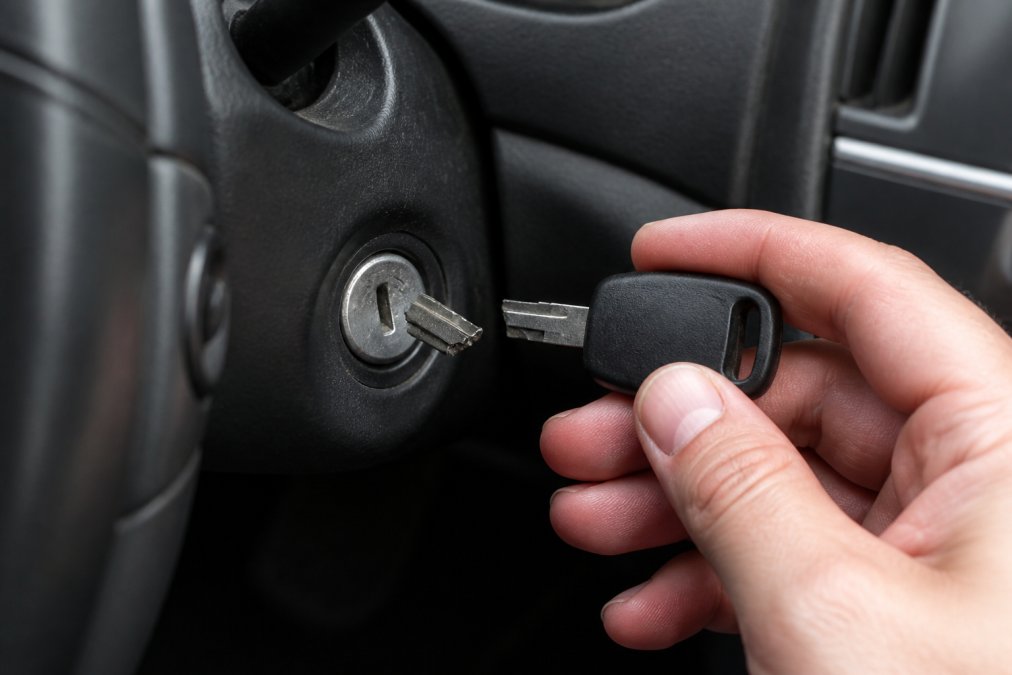
A broken car key feels like a disaster, but your first sixty seconds decide whether this is a minor inconvenience or a costly ignition repair. The rule: do not try to start the car again, and do not poke inside the ignition barrel with anything metal.
Here is what to do, in order:
- Stop turning the key. If the engine is running, leave it running and get somewhere safe. If not, leave the ignition alone.
- Apply the handbrake and switch on your hazard lights.
- Note where the break happened. A key that snapped near the bow leaves more blade inside the barrel than one that snapped near the tip (theaa.com).
- Photograph the broken piece you are holding, to help a locksmith match the key profile or read the key code.
- Do not insert anything else into the ignition. A second key, screwdriver, or paperclip will push the broken blade deeper.
If the steering wheel lock has engaged, do not force it, the ignition barrel and steering lock share a housing on many vehicles, and forcing the wheel can jam the broken blade further into the tumblers.
This is where Mobile Keys Norfolk gets called most often. Drivers who leave the key alone usually need a straightforward extraction; those who try a screwdriver first often need a replacement barrel too.
Broken Key Extraction Tools You Need
A proper broken key extraction tool is a thin, hooked pick designed to reach past the wafers and grip the broken blade without scratching the cylinder walls. Kits include several hook profiles because barrels vary between manufacturers.
The tool matters for geometry, not force: it must slide down one side of the blade channel, hook behind the leading edge, and pull back along the entry path. Too wide and it will not pass the wafers; too narrow and it slips off under load.
If you are attempting this yourself, a basic kit typically includes:
- Key extractor tools in two or three hook angles: a short hook for shallow breaks, a long hook for blades below the wafer line
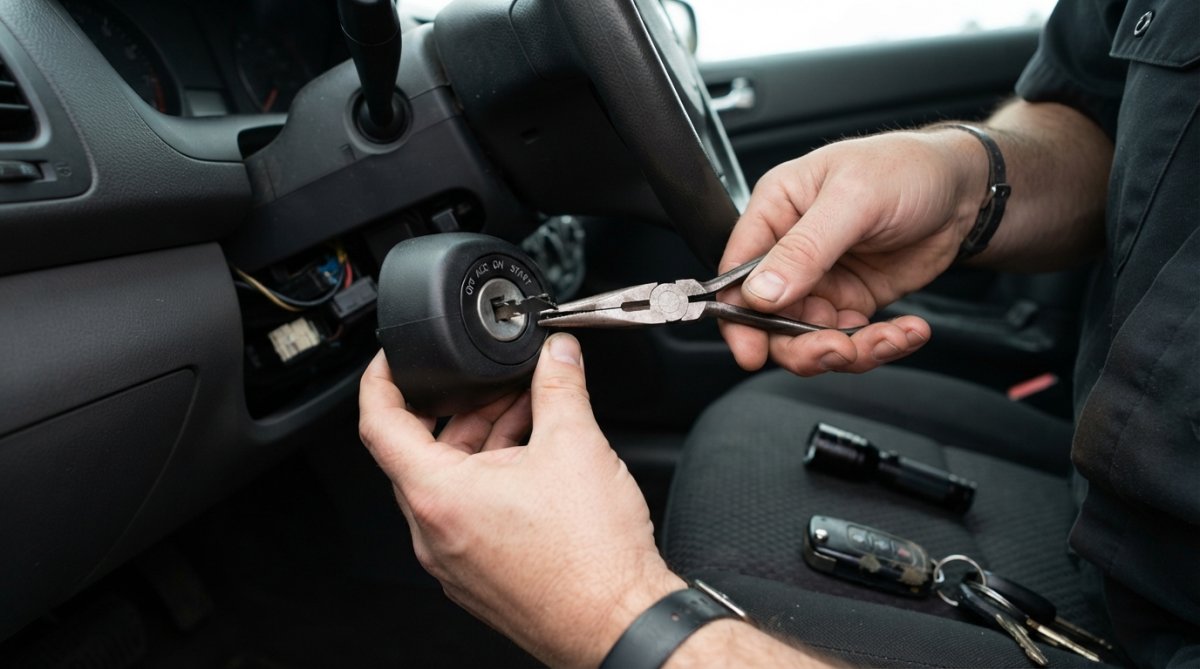
- Long nose pliers with a fine, straight tip, for gripping a visible stub without crushing it
- A scroll saw blade or fine hacksaw blade for the glue-and-pull method, whose teeth bite into the blade's edge
- A small torch or inspection light you can angle into the barrel mouth
- Compressed air or electrical contact cleaner, to clear graphite and metal dust first
- A lubricant such as graphite-based lock spray, applied after extraction, never before
What most guides miss is that the angle of approach matters more than the tool. Grip the blade at the very tip, not the middle, or it rotates and shears again. A common pattern: hooking the blade, then pulling at an angle rather than straight back, which bends it against the wafer and jams it harder.
Two sourcing points: a general-purpose pick set is not a dedicated automotive extractor, because automotive wafers sit closer together than door-lock pin tumblers. And on a laser-cut or sidewinder barrel, the channel is narrower and most generic extractors will not fit, the point at which DIY stops being sensible.
DIY Extraction Methods: Hot Glue, Pliers, and Scroll Saw Blades
Three methods dominate home extraction, each suiting a different break pattern. None are guaranteed, and all carry some risk to the ignition cylinder, so confirm what you are working on first.
First, identify your ignition type. A mechanical ignition has a key slot you turn through lock, accessory, on and start positions. A push-to-start vehicle has no key slot, just a button and a fob, so a broken key blade there usually snapped in a door lock or hidden emergency slot, not the ignition. If your car starts with a button, do not fish in the dashboard, the blade is elsewhere.
The Hot Glue Method
The hot glue method bonds a sacrificial blade to the broken piece so you can pull it free. You need a scroll saw blade or thin rigid plastic, a hot glue gun, and steady hands.
Heat the blade tip, apply a small bead of hot glue, insert it until it contacts the broken key, hold for around thirty seconds, then pull straight out (wikihow.com).
Where it fails: if the piece is jammed against the tumblers, the glue bond breaks before the blade moves, and leftover glue can foul the wafers. It also needs a flat face the glue can reach, which a laser-cut key with a narrow spine may not have.
Using Long Nose Pliers
Long nose pliers are fastest when part of the blade is visible above the barrel opening. Grip the exposed metal at the very edge, not the middle, and pull straight out with steady pressure. Do not twist.
This works best when the key snapped near the bow, leaving a visible stub; if the break is flush with the barrel, pliers will not reach it. A common mistake is gripping too hard, which deforms the stub and makes it wider than the channel it must pass back through.
Scroll Saw Blade Technique
A scroll saw blade is thin enough to slide alongside the broken key, and its teeth grip the blade's edge. Insert it flat against one side, rotate gently to engage the teeth, then draw it out slowly.
The scroll saw blade is the most forgiving method for deep breaks, but the slowest and most likely to scratch the cylinder wall if you rush. Work flat, rotate no more than a quarter turn, and pull along the barrel axis rather than levering against the mouth.
| Method | Best For | Difficulty | Main Risk |
|---|---|---|---|
| Hot glue | Deep breaks, no visible stub | Moderate | Glue residue in the barrel |
| Long nose pliers | Visible stub above the barrel | Easy | Bending or shearing the blade |
| Scroll saw blade | Deep breaks, patient DIY | Moderate | Scratching the cylinder wall |
The Risk Nobody Warns You About: The Transponder Chip
This is where most guides stop, and it matters most on anything built in the last fifteen years. The blade is only half the key: the head contains a transponder chip, and on many vehicles the chip sits close enough to the blade that a snapped key takes part of the housing with it.
If you are holding the broken half, check whether the chip is still inside it. If so, keep that piece safe, a locksmith can often read and clone the chip rather than programming a new one from scratch. If the chip is lost or cracked, the replacement key must be programmed to the immobiliser, a different job at a different cost.
Never heat the barrel to extract a broken blade, and never use superglue or any adhesive inside the ignition. Adhesive residue can bond the blade to the tumblers, turning a ten-minute extraction into a full ignition cylinder replacement.
If none of these methods work within fifteen minutes, stop. Continuing to fish around inside the barrel is how DIY jobs turn into replacement jobs.
Risks of Damaging the Ignition Cylinder and Modern Key Systems
The ignition cylinder is a precision assembly with wafer-thin tumblers. A broken car key is a mechanical failure, but the damage that follows is usually caused by the extraction attempt, not the break.
The three most common outcomes of a botched DIY extraction:
- Scored cylinder walls, which cause the replacement key to bind and wear prematurely
- Dislodged or bent tumblers, which can prevent the barrel from turning even with a perfect key
- A jammed blade pushed deeper into the housing, requiring the barrel to be removed entirely
Modern vehicles add a second layer of risk: a transponder chip in the key head that an immobilizer reads before the engine starts. If the chip is damaged or the head lost, the replacement key needs programming, not just cutting. Keyless entry adds a third layer, since the fob's electronics must be paired to the vehicle's security module.
This is what most forum advice ignores: on an older car with a plain mechanical key, a broken blade is a mechanical problem. On anything built in the last fifteen years, it is a mechanical problem sitting on top of an electronic one.
When to Call a Professional Auto Locksmith
Call a professional the moment any of the following is true:
- The broken blade is flush with or below the barrel opening
- You have already tried one DIY method without success
- The ignition feels stiff, gritty, or loose when you insert the remaining key
- The car has keyless entry, a transponder chip, or a smart key system
- You are on a roadside, in the dark, or in an unsafe location
An auto locksmith carries the extraction tools, key blanks, and diagnostic equipment to cut and program a replacement on the spot. On a modern vehicle that combination matters more than the extraction itself, because a key that is cut but not programmed will not start the car.
Mobile Keys Norfolk handles this as a single on-site visit: extraction, cutting, and programming, with a 30-minute arrival time and 24/7 availability. If you are stranded at home, at work, or on the roadside, the vehicle does not need to be towed.
Auto Locksmith Cost: What Affects the Price
Auto locksmith cost depends on four factors: how deep the broken blade sits, whether the barrel is damaged, whether the replacement key needs programming, and when you call.
A straightforward extraction on a mechanical key sits at the lower end; removing and replacing the barrel plus programming a new transponder key sits at the higher end, combining labour, parts, and diagnostic time.
The variables that push a quote up:
- Key type. A plain mechanical key blank is cheap. A transponder key, remote key, or smart key fob costs more because of the electronics inside it.
- Programming requirement. Immobilizer and keyless systems need the new key paired to the vehicle, which requires diagnostic equipment.
- Time of call. Out-of-hours and weekend callouts carry a premium with most providers.
- Location. A roadside job on a busy route is quicker to reach than a vehicle parked deep in a rural lane.
Mobile Keys Norfolk does not publish fixed prices because the variables above change the job substantially. Call 07399 583760 with your registration and location for a quote before any work begins, so there are no surprises.
Post-Extraction Checks and Replacement Options
Once the broken blade is out, check the ignition before fitting a new key and driving on.
Run through this assessment:
- Insert the remaining key or a spare and turn the ignition through its full range
- Listen for grinding, clicking, or a gritty feel as the key turns
- Check that the steering lock disengages smoothly
- Confirm the immobilizer light goes out as normal
- Test that the key releases cleanly without resistance
If the ignition feels different from before the break, the cylinder has likely been scored or a tumbler has moved. Driving on a damaged barrel accelerates wear and can strand you a second time.
Replacement options, in order of cost:
- A spare key, if you have one, gets you moving immediately. Use it to test the ignition before committing to a replacement.
- A replacement key blade, cut to the existing key code, is the cheapest option for a mechanical key.
- A full replacement key with a transponder chip, cut and programmed on-site, is the standard fix for modern vehicles.
- A replacement barrel or ignition switch, needed only if the cylinder itself is damaged.
Worth knowing: a key code is often printed on a plastic tag supplied with the vehicle when new, or stored by the manufacturer. With that tag, a locksmith can cut a factory-accurate replacement rather than copying a worn key.
Frequently Asked Questions
What should I do if my car key breaks inside the ignition?
Stop turning the ignition immediately. Trying to force it can push the broken key blade deeper into the ignition cylinder and damage the tumblers. If the key fob is still attached, remove it gently. Do not attempt to start the car. If you can see the broken piece and have long nose pliers, you may try a gentle extraction. If the fragment is stuck or the ignition feels loose, call a professional auto locksmith. They have specialist broken key extraction tools to remove it without damaging the cylinder housing.
Can I drive with a broken key piece stuck in the ignition?
No. Driving with a broken key fragment inside the ignition is unsafe and can cause further damage. The piece can interfere with the steering wheel lock or immobilizer system, potentially preventing the car from starting or locking the steering. It may also damage the pin alignment inside the ignition switch. If the car is already running when the key breaks, do not turn it off until you are in a safe location, then seek professional help. Continuing to drive risks a costly replacement barrel.
How much does it cost to fix a broken car key?
The auto locksmith cost depends on several factors: your vehicle's make and model, whether the key has a transponder chip or key fob, and whether the ignition cylinder needs repair. A simple extraction is usually less than replacing a programmed key. For an accurate quote, contact a reputable auto locksmith with your vehicle details. Pricing varies, so always ask for a clear estimate before work begins.
Is it safe to use pliers to remove a broken key?
Using long nose pliers can work if a portion of the broken key blade is protruding enough to grip. However, if the fragment is deep inside the ignition cylinder, pliers may push it further in or damage the tumblers. Never use excessive force. If the key does not come out with a gentle pull, stop and call a professional. They have specialised broken key extraction tools, such as extraction hooks, that are designed to remove snapped keys without harming the ignition switch or immobilizer system.
A snapped key is a fifteen-minute problem if you stop and call for help, and a full ignition replacement if you keep poking at it. Mobile Keys Norfolk specialises in on-site extraction, cutting, and programming, so the whole job is handled in one visit with a 30-minute arrival time and 24/7 availability. Get started with Mobile Keys Norfolk by calling 07399 583760 and get back on the road without a tow.