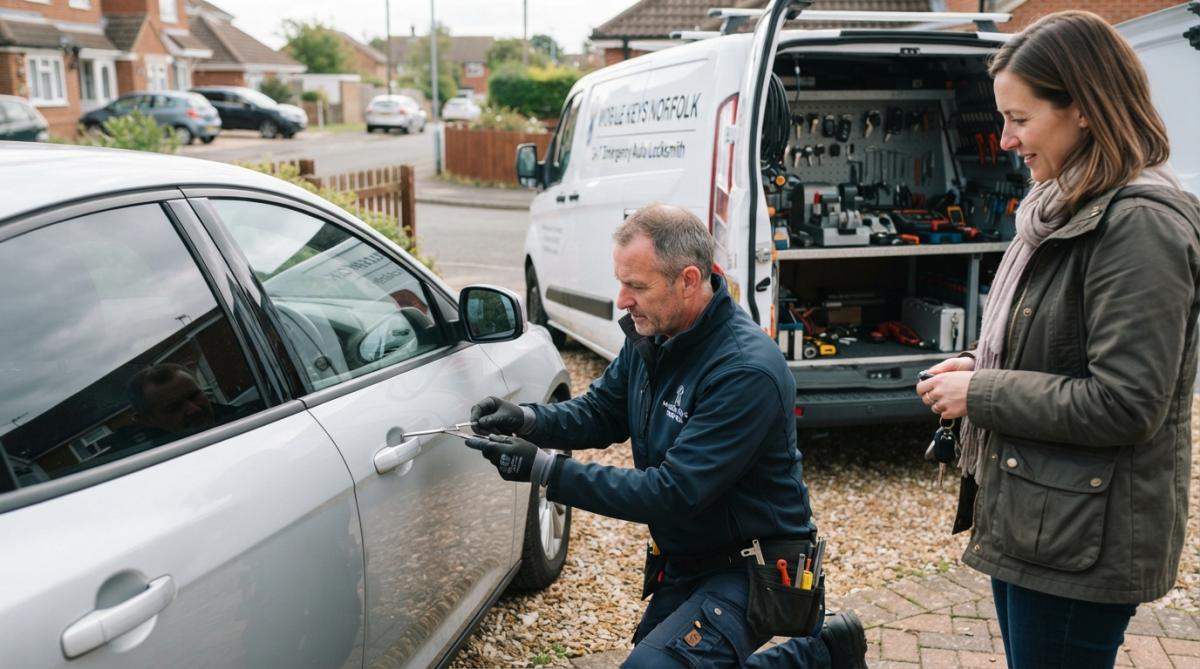
 how-to
How to Choose a Reliable Emergency Locksmith
Table of Contents
- Check Credentials Before You Call
- Emergency Locksmith Response Time: What's Realistic
- Emergency Auto Locksmith Cost: What You're Actually Paying For
- Spotting Bait-and-Switch Pricing and Hidden Costs
- Local Locksmith or National Call Centre?
- Insurance, Liability, and Your Rights After the Job
- What to Do in the First Five Minutes of a Lockout
- Frequently Asked Questions
Last Updated: September 18, 2026
Check Credentials Before You Call
The fastest way to avoid a rogue trader is to ask three questions before anyone touches your car. A reliable emergency locksmith will answer all of them without hesitation.
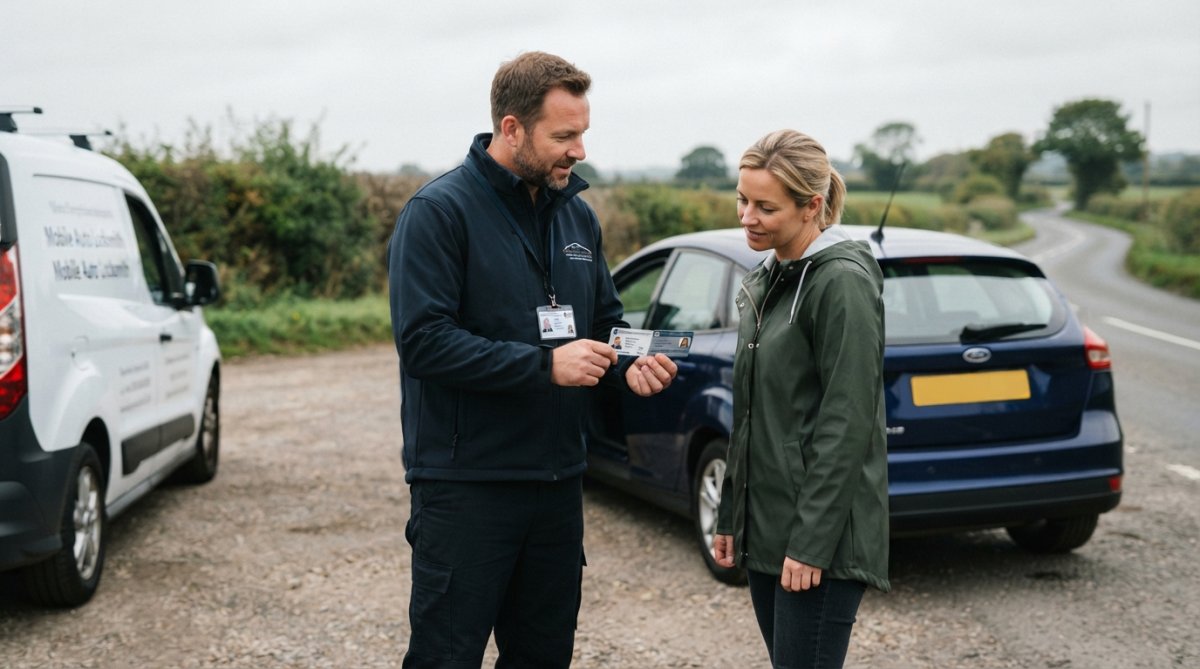
A legitimate locksmith is a tradesperson who can prove who they are, what they belong to, and what insurance covers their work. That proof should exist before they arrive, not after.
Here is what to ask:
- Are you a member of a recognised trade association, and what is your membership number?
- Can you show photo ID and a DBS check on arrival?
- Do you hold public liability insurance, and for how much?
According to the Metropolitan Police's advice on doorstep and tradesperson fraud, you should never let an unverified tradesperson start work before you have seen identification. The same logic applies at the roadside.
How to verify a locksmith when they arrive
Asking the questions is only half the job. The other half is checking the answers against something you can see. When the technician pulls up, work through this sequence before you hand over keys or allow any tools near the vehicle:
- Match the vehicle to the company. A branded van or car with a company name, logo and phone number is a good sign. An unmarked vehicle with no signage is a red flag, especially if the driver cannot produce a job sheet or dispatch text.
- Check the photo ID against the person. Look at the name, the photo and the expiry date. A genuine trade ID will usually show the company name and a membership or registration number.
- Cross-check the membership number. If the locksmith claims to belong to a trade association, ask them to show the card or a digital membership certificate. You can also call the association's office or check its online member directory while the technician waits. A legitimate member will not object to a two-minute check.
- Confirm the insurance details. Ask for the insurer's name and the policy number, and note them down. If the technician cannot provide these, treat the job as uninsured.
- Check the DBS status if you are a vulnerable customer. For work at your home or involving access to your property, a current DBS check is reasonable to request. The technician should be able to show the certificate or a portable DBS update.
What to do if the verification fails
If the technician cannot or will not provide ID, membership details or insurance information, do not let them start. You are not obliged to proceed, and you should not feel pressured because you are stranded. Ask them to leave, note the vehicle registration and company name if visible, and call a different local firm. If you believe you have been targeted by a rogue trader, you can report it to Trading Standards via the Citizens Advice consumer service, which passes cases to the relevant local authority (Reporting to Trading Standards).
Emergency Locksmith Response Time: What's Realistic
A realistic emergency locksmith response time is 30 to 60 minutes in a built-up area, and longer in rural locations. Anyone promising five minutes is either exaggerating or routing you to a call centre that has not dispatched anyone yet.
Response time depends on four things:
- How far the technician is from your location
- Traffic and time of day
- Whether the job needs a key cut on site or just entry
- Whether you are on a main road or a back lane
Emergency Auto Locksmith Cost: What You're Actually Paying For
Emergency auto locksmith cost depends on the job, not on how desperate you sound. A fair quote breaks down into clear parts, and a good locksmith will explain each one before starting.
Most quotes include:
- A call-out fee covering travel to you
- Labour for non-destructive entry or broken key extraction
- The cost of the key blank or fob, if a replacement is needed
- Programming time for the lock mechanism or immobiliser
Spotting Bait-and-Switch Pricing and Hidden Costs
Bait-and-switch is the single most common scam in this trade. The pattern is always the same: a low headline price on the phone, then a much larger bill once you are locked out and have no choice.
Watch for these red flags:
- A quote that is dramatically cheaper than every other company you called
- No fixed price, only "we'll see when we get there"
- Pressure to pay in cash only, with no receipt
- A technician who arrives in an unmarked van with no branding
- Sudden "extra fees" for the time of day, the type of lock, or "special tools"
Local Locksmith or National Call Centre?
A local locksmith is far more likely to give you a fair price and a real arrival time than a national call centre. The difference comes down to who actually turns up.
| Factor | Local Locksmith | National Call Centre |
|---|---|---|
| Who attends | Their own technician | Subcontracted stranger |
| Pricing | Fixed quote, VAT inclusive | Often inflated on arrival |
| Accountability | Local reputation at stake | Hard to trace |
| Response time | Realistic, area-based | Frequently overstated |
Insurance, Liability, and Your Rights After the Job
Insurance and liability cover are the parts most customers never think to check, and they matter most when something goes wrong. This is also where most guides stop, which leaves you without a plan once the locksmith has driven away.
Post-service security audit
Once the locksmith has left, spend five minutes checking the work. This is the step almost no guide covers, and it is where problems are caught early enough to be fixed without argument.
- Test every key. Try each key and fob in every lock it is meant to operate. A new key that works in the driver's door but not the boot is a problem you want to find now, not at 6am tomorrow.
- Check lock alignment. Look at the door, boot and any repaired lock. The panels should sit flush, the lock should turn smoothly, and there should be no new gaps or rattles.
- Check for warning lights. Start the engine and look at the dashboard. A new key or fob that has not been programmed correctly can trigger immobiliser or security warnings.
- Test the central locking and alarm. Lock and unlock the car from a distance, and check that the alarm arms and disarms as normal.
- Photograph the invoice and the technician's details. Keep a record of the company name, the price paid, the date and the work carried out. If anything fails later, this is your evidence.
- Check the guarantee terms. Ask what is covered and for how long. A service guarantee is the mark of a business that expects to stand behind its work.
If something goes wrong after the job
If you notice damage or a fault that was not there before, contact the locksmith in writing as soon as possible. Set out what happened, when, and what you want them to do. If they are a member of a trade association, the association may have a dispute resolution service. If they are not, you can escalate to the Citizens Advice consumer service, which can advise on your next steps and pass the matter to Trading Standards where appropriate.
What to Do in the First Five Minutes of a Lockout
The first five minutes decide whether your lockout is a minor inconvenience or an expensive mistake. Stay calm, stay safe, and follow these steps in order.
- Move to safety. Get out of traffic lanes and stand behind a barrier if you can.
- Check every door and the boot. A surprising number of "lockouts" are a second door that was never locked.
- Call someone you trust. A spare key at home beats any call-out fee.
- Search for a local locksmith with a real address. Avoid the first sponsored result.
- Ask for a fixed quote and an arrival time. Get it by text.
- Check ID on arrival. No ID, no job.
- Confirm the price again before work starts. Then pay by card or bank transfer, never cash only.
Frequently Asked Questions
How do I know if a locksmith is reputable?
Check for public liability insurance. Look for verified reviews on Google, and ask for a fixed price quote before work starts. A reputable emergency locksmith will confirm credentials over the phone, explain the process for non-destructive entry, and never pressure you into paying cash without an invoice.
How much should an emergency locksmith cost?
Emergency auto locksmith cost varies based on the vehicle model, key type, time of day, and whether the key needs programming on-site. You should always receive a fixed price quote that states whether VAT is included and what the call-out fee covers. Ask upfront about any potential hidden costs such as broken key extraction or lock replacement before agreeing to the job.
How can I avoid locksmith scams in an emergency?
Avoid national call centres that dispatch independent contractors without vetting. Ask the person on the phone for the business name, a landline number, and a fixed quote. If the price changes on arrival, refuse the work. Legitimate emergency locksmiths carry ID, arrive in branded vehicles, and use non-destructive entry techniques wherever possible.
What qualifications should a professional locksmith have?
Look for public liability insurance. For auto locksmiths specifically, ask whether they carry diagnostic equipment capable of programming your vehicle's key on-site.
A lockout is stressful, but it does not have to be expensive or risky. The difference between a smooth recovery and a costly scam comes down to who you call and what you check before they arrive. Mobile Keys Norfolk provides 24/7 availability, on-site key cutting and programming, and a 30-minute arrival time across the county, so you get a verified technician, a clear price, and a working key without the guesswork. Call 07399 583760 and get back on the road.