 how-to
Common Causes of Car Key Fob Failure: Troubleshooting Guide
Table of Contents
- Why Your Car Key Fob Stops Working
- Dead or Flat Battery: The Most Common Culprit
- Signal Interference and Radio Frequency Issues
- Worn Buttons and Damaged Microcontacts
- Water Damage and Physical Damage to the Fob Casing
- Circuit Board Failure and Transponder Chip Problems
- Vehicle Battery and Immobilizer System Issues
- Key Fob Reprogramming Cost and When to Reprogram
Last Updated: August 22, 2026
Why Your Car Key Fob Stops Working
A car key fob failure can leave you stranded when you need your vehicle most. Your key fob relies on a complex ecosystem of components: a power source, radio frequency transmitter, circuit board, transponder chip, and receiver system in your vehicle. When any single element fails, the entire system breaks down.
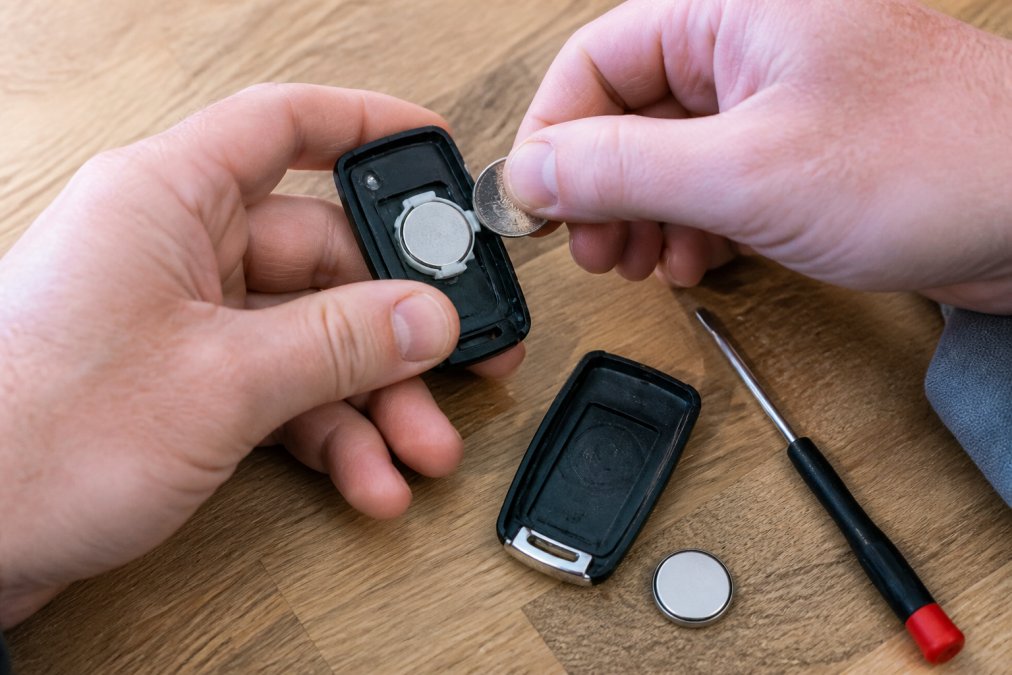
Not every fob failure requires a dealership visit. Many common causes are fixable at home with basic tools, while others demand professional intervention. Understanding the root cause saves time, frustration, and money.
This guide breaks down the most frequent culprits behind car key fob failure, how to troubleshoot each one, and when to call a professional locksmith versus attempting a DIY fix.
Dead or Flat Battery: The Most Common Culprit
A dead battery accounts for the majority of apparent key fob failures (peer-reviewed research). Your fob contains a coin cell battery (typically CR2032, CR2025, or similar lithium battery) that powers the transmitter. When voltage drops below the threshold needed to generate a radio frequency signal, your fob stops working instantly.
Warning signs include reduced range, less responsive buttons, or needing to press harder to trigger a response. These indicate battery voltage is declining.
How to Change Car Key Fob Battery
Replacing a dead battery is the easiest car key fob failure fix you can attempt yourself. Most fob casings are designed for user replacement, though some modern vehicles use sealed units that cannot be opened without damage.
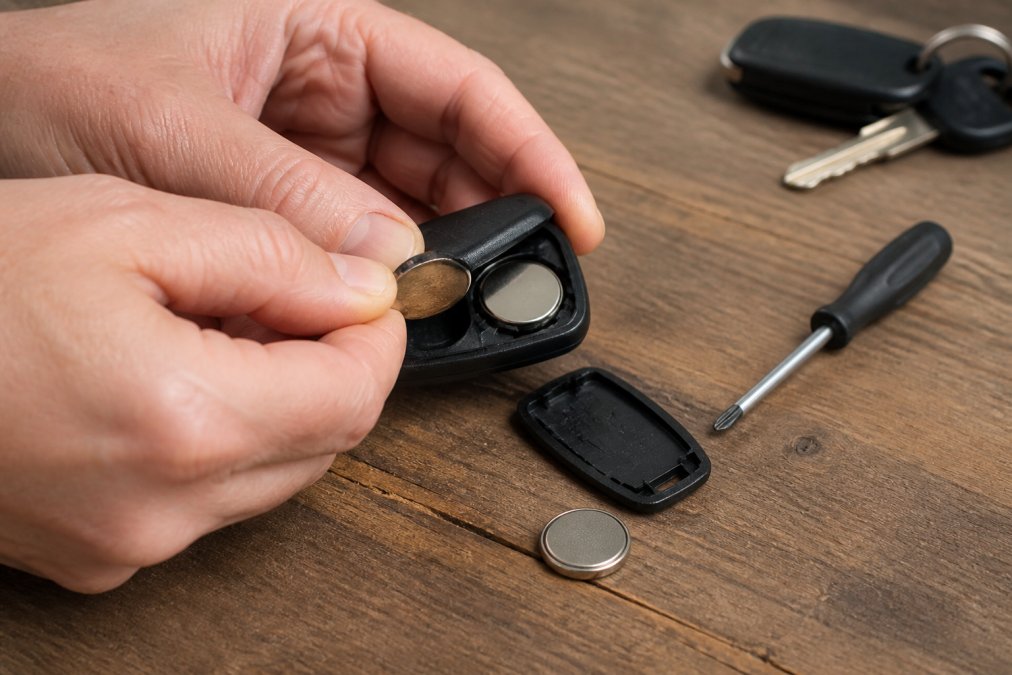
Step 1: Locate the battery compartment Examine your fob for a seam or slot along the edge. Most fobs have a small indentation where the casing splits.
Step 2: Open the casing carefully Use a coin (typically a 1p or 2p piece) to gently pry the casing apart. Insert the coin into the seam and twist slowly. Do not force it; excessive pressure can crack the plastic housing or damage internal contacts.
Step 3: Remove the old battery Note the battery orientation. The positive (+) side typically faces upward. Gently lift or slide the old coin cell out. Do not touch the contacts with bare fingers, as oils can interfere with conductivity.
Step 4: Install the new battery Insert the replacement coin cell with the positive side facing the same direction as the original. Press gently until it sits flush. Most retailers stock CR2032 batteries as the universal standard, though your vehicle's manual specifies the exact type.
Step 5: Close the casing Align the two halves and press firmly until you hear a click. Test the fob immediately.
The entire process takes under 10 minutes. A replacement coin cell costs between £1 and £3 from any supermarket, pharmacy, or electronics retailer.
Signal Interference and Radio Frequency Issues
Your key fob transmits on a specific radio frequency (typically 315 MHz in some regions, 433 MHz in others) (fcc.gov). This signal travels from your fob to a receiver module in your vehicle. Radio frequencies are vulnerable to interference from cell phone towers, high-voltage power lines, airport radar systems, and some modern LED street lighting.
Signal interference disrupts communication. Your fob may work perfectly indoors but fail in certain outdoor locations, or the range may suddenly decrease. These are classic symptoms of RF interference rather than fob hardware failure.
Troubleshooting signal interference:
Test your fob in different locations. If it works near home but fails near your workplace, interference from that specific area is likely the culprit. Try standing in different positions relative to your vehicle; sometimes moving a few metres eliminates the problem. If the fob works consistently in some locations but never in others, environmental RF interference is almost certainly responsible.
The fix is straightforward: move away from the interference source. Signal interference does not indicate a failing fob; your device is functioning normally and the environment is simply blocking its transmission.
Worn Buttons and Damaged Microcontacts
The buttons on your key fob sit atop microswitches that complete an electrical circuit when pressed. The contact points are microscopically small and coated with conductive material. Years of repeated pressing wear these contacts down.
Worn button contacts create inconsistent connection. You might need to press the button multiple times before it registers, or it may feel mushy or unresponsive. Water exposure accelerates this wear by corroding the contact points and creating an oxide layer that blocks electrical flow.
Once microcontacts are damaged, replacement is the only reliable fix. Professional locksmiths can sometimes replace individual buttons or the entire button pad assembly. This repair costs less than a complete fob replacement but more than a battery swap.
Water Damage and Physical Damage to the Fob Casing
Your key fob is not waterproof (iso.org). Water that enters the casing corrodes the circuit board, damages the transponder chip, and causes battery terminals to oxidize.
Early signs of water damage include buttons that stick or feel sluggish, intermittent operation that worsens over time, and complete failure after exposure to humidity or rain. Physical damage from dropping or crushing can crack the circuit board or damage the antenna inside, causing unpredictable failures.
If your fob has been dropped, submerged, or exposed to heavy moisture, the damage is usually permanent. Prevention is far more effective than repair. If you do expose your fob to water, immediate action helps: remove the battery, open the casing, and allow all components to air-dry completely for 24-48 hours in a warm, dry environment.
Circuit Board Failure and Transponder Chip Problems
The circuit board inside your fob is a miniature computer that processes button presses and generates the radio frequency signal. The transponder chip stores your vehicle's unique security code. Both can fail independently.
Circuit board failure typically manifests as complete non-responsiveness. Your fob does nothing regardless of which button you press, even though the battery is fine and buttons feel normal. Transponder chip failure is more subtle: your fob may transmit a signal, but the immobilizer rejects the code as invalid and your car won't unlock or start.
Both failures are permanent. Circuit boards and transponder chips cannot be repaired; they must be replaced. These repairs require professional equipment and expertise beyond typical DIY capabilities. Modern vehicles use encrypted transponder systems that prevent cloning. Only a dealership or specialist locksmith with the correct programming equipment can address chip failures.
Vehicle Battery and Immobilizer System Issues
Sometimes the problem isn't your fob at all, it's your vehicle's receiver system. Your car's immobilizer module receives the signal from your fob and decides whether to unlock doors or allow engine start. If this receiver fails, your fob becomes useless even though it's functioning perfectly.
A weak or dead vehicle battery can also cause apparent fob failure. If your vehicle battery is severely depleted, the receiver may not have enough power to respond to incoming signals.
Testing this distinction is straightforward: try using your spare fob. If the spare works fine, your original fob has failed. If the spare also fails, the problem lies in your vehicle's receiver system or battery.
Key Fob Reprogramming Cost and When to Reprogram
Key fob reprogramming synchronizes your fob with your vehicle's receiver module. Some vehicles lose this synchronization after extended use or accidental button presses. Others require reprogramming when you've replaced the fob battery or obtained a replacement fob.
Your vehicle's manual specifies whether your fob requires reprogramming after battery replacement. Some vehicles reprogram automatically when you insert a new battery and press a button. Others use a manual sequence: turn the ignition to the "On" position, back to "Off," then press the unlock button while the ignition is off.
Reprogramming becomes essential when you've purchased a replacement fob and need to sync it with your vehicle. Modern vehicles use encrypted security codes that prevent generic fobs from working. A locksmith or dealership must program your specific fob with your vehicle's unique code.
Mobile Keys Norfolk specializes in on-site key fob reprogramming for vehicles across Norfolk. Rather than towing your car to a dealership, a mobile service comes to your location with the specialized equipment needed to program your replacement fob.
Reprogramming costs vary depending on your vehicle's make, model, and year. Older vehicles with simpler systems cost less. Newer models with advanced keyless entry and push-to-start ignition systems require more sophisticated equipment, increasing the cost. Contact a local locksmith for a quote tailored to your specific situation.
When your car key fob fails, the cause determines your next step. A dead battery might be a five-minute fix. Signal interference might resolve itself once you move away from the interference source. But water damage, circuit board failure, or transponder chip problems demand professional intervention.
Mobile Keys Norfolk offers rapid diagnosis and repair for all types of key fob failure. With 24/7 availability and a 30-minute arrival time, you're never left stranded waiting for help. Our team carries the specialized equipment needed to reprogram modern fobs on-site, getting you back on the road without dealership delays or excessive costs. Call 07399 583760 for immediate assistance.
Frequently Asked Questions
Q: What are the most common reasons why a car key fob stops working?
A: The most common cause is a dead or flat battery, which typically lasts 3-4 years depending on usage. Other frequent causes include worn button contacts, water damage to the fob casing, signal interference from nearby electronics, and transponder chip failure. Vehicle battery issues and immobilizer system faults can also prevent your fob from working. If your car key fob failure is sudden, start by checking the battery and testing the buttons before assuming more serious damage has occurred.
Q: How do I know if my car key fob battery is dead?
A: A dead battery usually shows clear signs: buttons stop responding, the remote only works when held very close to the car, or you get no response at all. Some fobs have indicator lights that dim before complete failure. You can test the battery by looking inside the fob casing (usually a coin cell or lithium battery marked with voltage). If the terminals show corrosion or the battery looks discoloured, replacement is needed. Testing takes minutes and costs just a few pounds for a replacement coin cell.
Q: What does car key fob reprogramming cost, and when do I need it?
A: Reprogramming costs vary depending on your vehicle model and whether you use a dealership or mobile locksmith service. You need reprogramming when you've replaced the battery or fob casing but the remote still doesn't sync with your vehicle's immobilizer system. Some vehicles allow DIY reprogramming through a sequence of ignition turns or button presses, while others require professional equipment. Mobile locksmiths can often reprogram on-site, which is faster and more convenient than visiting a dealership.
Q: Can I fix a car key fob myself, or do I need professional help?
A: Simple fixes like battery replacement are straightforward DIY tasks requiring only a coin and a few minutes. However, water damage, circuit board failure, worn microcontacts, and transponder chip problems typically need professional repair or replacement. If your fob has physical damage, water ingress, or the buttons are unresponsive after battery replacement, professional diagnosis is worthwhile. A locksmith can test your fob's radio frequency response and immobilizer pairing to identify the exact fault.
This article was written using GrandRanker