 how-to
Car Key Duplication Time: How Long Does It Take?
Table of Contents
- How Long Does Car Key Duplication Take?
- What Factors Affect Key Duplication Time?
- Understanding the Transponder Key Duplication Process
- Mobile Auto Locksmith Service Time vs. Dealership
- What to Bring to Speed Up Your Appointment
- Car Key Replacement Cost UK: Is Time Linked to Price?
- DIY vs. Professional Equipment Limitations
- Be Prepared: A Quick Checklist
- Frequently Asked Questions
Last Updated: September 5, 2026
How Long Does Car Key Duplication Take?
Car key duplication is the process of creating a working copy of your vehicle key, either by cutting the physical blade or programming a new electronic transponder chip. Most standard car key duplications take between 10 and 30 minutes when performed by a professional, while modern transponder keys with programming can take up to 60 minutes (aloa.org). At Mobile Keys Norfolk, we regularly complete on-site replacements within that same window, arriving at your location in around 30 minutes before starting the work.
The real answer depends on one question: what kind of key are you holding? A basic metal key from an older vehicle is quick work for any cutting machine. A 2019 keyless entry fob is a different story entirely, requiring electronic synchronization with your car's immobilizer system. Below, we will show you exactly how the process works and what causes the clock to run longer.
Standard Keys vs. Transponder Keys
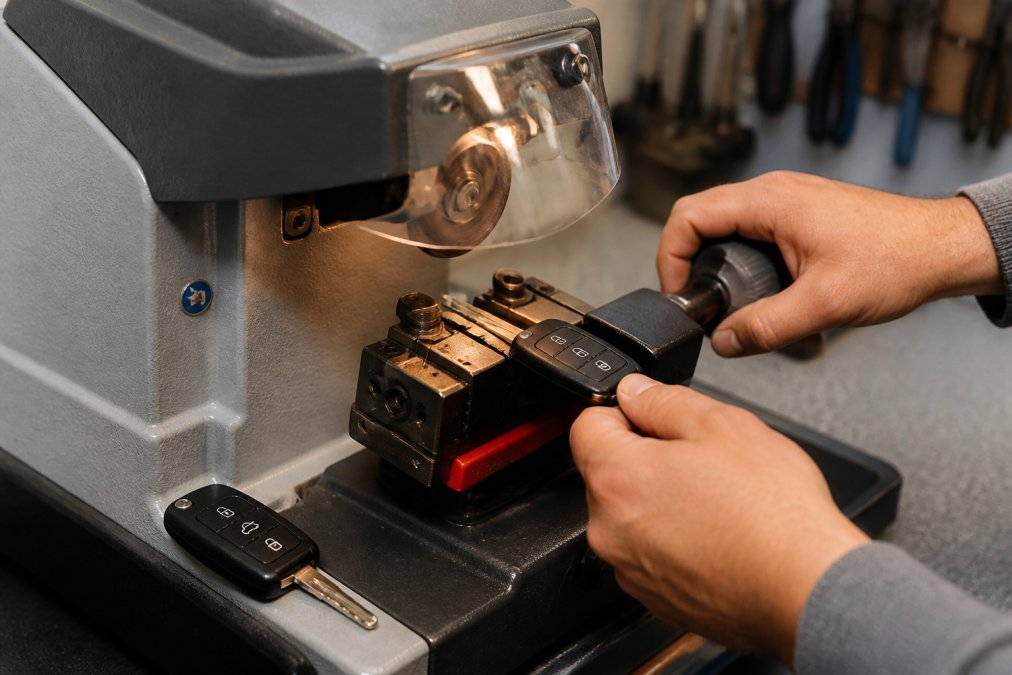
Standard keys are plain metal blades with no electronics. Duplicating one is straightforward: the locksmith reads the key's cuts, selects the correct key blank, and runs it through a key cutting machine. Expect 5 to 10 minutes from start to finish.
Transponder keys contain a microchip inside the plastic head (nhtsa.gov). When inserted into the ignition, the chip transmits a code to the vehicle's immobilizer system. If the codes do not match, the engine will not start. This added security layer means duplication is not just about cutting metal; it requires key programming to sync the new chip to your car.
The Role of Key Programming
Key programming is the electronic step that makes a new transponder key work with your specific vehicle. Without it, your new key may unlock the doors but leave you stranded when the ignition refuses to turn over.
Modern programming methods fall into two categories. On-board programming lets you sync a new key yourself using a sequence of ignition turns, often with an existing working key. This works for many vehicles but is not universal. The other method uses a diagnostic tool connected to the vehicle's OBD port, which a professional auto locksmith carries. This approach handles more complex systems, including proximity keys and remote head keys that require electronic synchronization beyond simple chip cloning.
What Factors Affect Key Duplication Time?
Several variables determine whether your car key duplication takes 10 minutes or closer to an hour. The vehicle's make and model, the key type, and the condition of your existing key all play a part.
Key Type and Age
Older, worn keys can slow down the process. If the blade has rounded edges or the cuts are shallow from years of use, the locksmith may need to decode the key manually rather than simply tracing the worn profile. A damaged key fob can also complicate matters if the internal transponder chip is loose or corroded.
Your Car's Security System
High-security keys, including laser-cut keys and fobik systems, require more advanced equipment. Laser-cut keys have a distinctive shape with cuts on both sides and need a specialized key cutting machine. Proximity keys, which let you start the car without inserting the key, often require the locksmith to access the vehicle's security code through a diagnostic tool. The more encryption involved, the longer the process takes.
Understanding the Transponder Key Duplication Process
The transponder key duplication process involves three distinct stages: cutting the physical blade, programming the electronic chip, and testing the key to confirm it starts the engine. A professional mobile service can complete all three on-site, saving you the cost and hassle of towing your vehicle to a dealership.
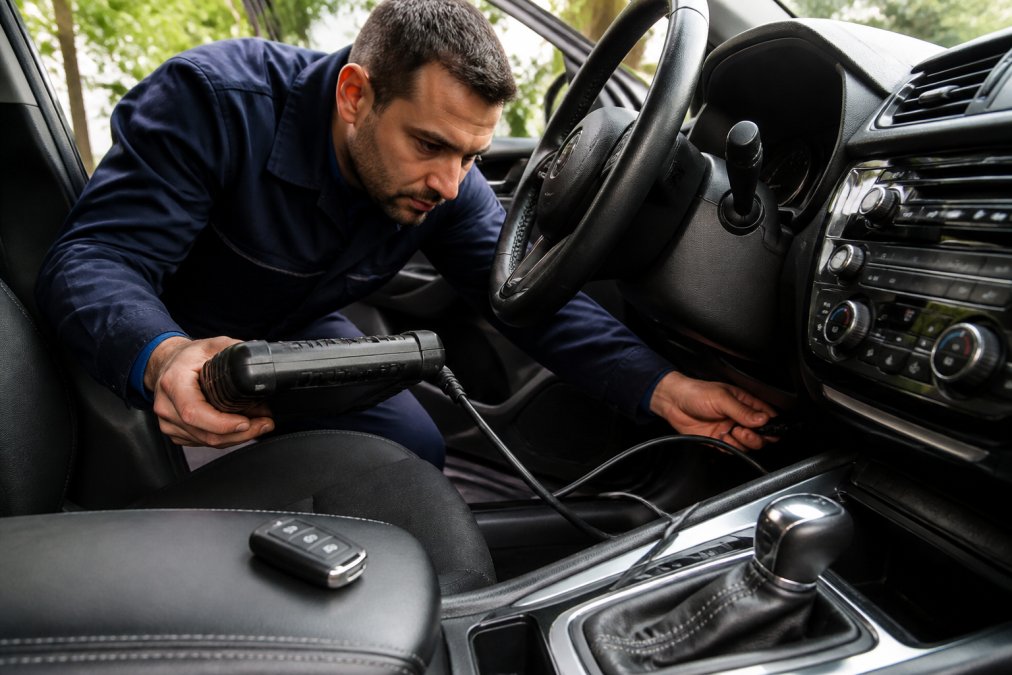
First, the locksmith cuts the new key blade to match your original or decodes it using the vehicle identification number, often called VIN-based key cutting. Next, they connect a diagnostic tool to your car to access the immobilizer system and program the new transponder chip. Finally, they test the key in the ignition to verify the electronic synchronization worked.
The most common issue we see is a key fob battery failure being mistaken for a dead key. If your key suddenly stops working, try replacing the fob battery before assuming the chip has failed. A fresh battery costs a few pounds and can save you an unnecessary service call.
Mobile Auto Locksmith Service Time vs. Dealership
Dealerships often quote several hours or even days for car key replacement, largely because they must order the correct key blank from the manufacturer. You may also need to arrange towing to get the car there, which adds time and expense.
Why Mobile Service Is Often Faster
A mobile auto locksmith service time typically starts with the call and ends with you driving away, all in a single visit. Because a mobile locksmith carries a stock of key blanks and the necessary diagnostic equipment, they can cut and program a replacement at your home, workplace, or roadside location.
For drivers in Norfolk, this is the difference between losing an afternoon and losing 30 minutes. Mobile Keys Norfolk offers 24/7 availability, so whether you are stranded on the outskirts of Norwich at midday or locked out at 3am on a weekend, the service arrives at your location rather than the other way around.
What to Bring to Speed Up Your Appointment
Preparation shortens the job. Having the right documents and information ready means the locksmith can verify ownership and start work immediately.
- Your vehicle registration document (V5C) to prove ownership
- Photo identification, such as a driving licence or passport
- Your existing key, even if it is damaged or worn
- Your vehicle's VIN code, found on the dashboard or driver's door frame
If you have lost all keys, the locksmith can still help, but the process takes longer. Without an existing key to read, they must rely on VIN-based key cutting and may need to access the immobilizer system's security code directly.
Car Key Replacement Cost UK: Is Time Linked to Price?
Car key replacement cost UK varies significantly depending on the key type and where you take it. Dealership pricing tends to be higher because of manufacturer markup and labour rates, while mobile locksmiths often offer more competitive quotes for the same work.
There is a loose relationship between time and cost. A basic standard key that takes minutes to cut will cost less than a transponder key requiring programming or a proximity key with advanced encryption. However, the bigger cost driver is the equipment and expertise required, not the minutes on the clock.
For an accurate figure, request a quote before committing. Mobile Keys Norfolk provides clear pricing when you call, so you know the cost before the technician arrives. That transparency matters, particularly when you are comparing a mobile service against a dealership's estimate.
DIY vs. Professional Equipment Limitations
The gap between DIY and professional car key duplication is not about skill, it is about the machinery and software required to interface with modern vehicle security. Understanding that gap sets realistic expectations for how long the job will take and whether it can be done at all outside a professional workshop.
Mechanical Cutting: Manual vs. CNC Machines
For a standard edge-cut key, a basic manual cutting machine traces the original key's profile and mills a copy. This works well when the original is in good condition. But worn keys, with rounded edges or shallow cuts from years of use, produce inaccurate copies. The cutter follows the worn profile, and the new key may not align perfectly with the lock pins.
Professional locksmiths use CNC (computer numerical control) key cutting machines. These do not trace the key; they decode the cuts optically or from a code and then mill the blade to factory tolerances. A CNC machine can cut a key from the VIN alone, without any physical original. This is the VIN-based key cutting method mentioned earlier. The time difference is significant: tracing a good key takes 2-3 minutes, but decoding a worn key and cutting from code takes 10-15 minutes because the locksmith must first identify the correct key blank and then enter the cut depths manually.
Retail kiosks and hardware stores typically use tracer-style machines. They are fine for simple house keys or older car keys with no electronics, but they cannot handle laser-cut keys (which have cuts on both sides and require a specialised vice and cutter) or high-security keys with restricted blanks that are not sold to the public.
Electronic Programming: Cloners vs. Diagnostic Tools
The electronic side shows an even wider gap. Consumer-grade key cloners, available online for under £100, can copy a fixed-code transponder in minutes (peer-reviewed research). You place the original near the device, it reads the chip's ID, and then you place the new blank nearby to write that ID. This works for a narrow range of older vehicles.
It fails for rolling code and crypto transponder systems. A cloner copies a static identifier; it cannot replicate the dynamic challenge-response algorithm. Attempting to clone a crypto key produces a blank that the vehicle ignores. Some cloners claim to support these systems but require additional software licences that cost more than the device itself, and the success rate is inconsistent across model years.
Professional diagnostic tools, such as those from Autel, Launch, or Abrites, connect to the vehicle's OBD port and communicate directly with the immobiliser module. They can read the security code, enter programming mode, and register a new key as an authorised device. These tools cost thousands of pounds and require regular software updates to cover new vehicle models. That is why a mobile locksmith's service time includes not just the physical cutting but also the electronic authentication process, which can take 20-40 minutes for modern proximity keys.
The Real Risk of DIY
The most common DIY failure is not a key that fails to program; it is a vehicle that becomes locked out of its own key system. Many manufacturers limit the number of keys that can be stored in the immobiliser memory. If you attempt an on-board programming sequence and the process fails midway, the system may erase all existing key codes. Your original key, which worked an hour ago, is now unrecognised. The vehicle will not start, and you will need a professional with dealer-level software to recover the system.
A second risk is physical damage to the key blank. Cutting a laser key requires precise alignment; a slight error produces a blade that fits the ignition but does not turn. You have then wasted the cost of the blank and the cutting fee, and you still need a professional.
When DIY Is Reasonable
DIY is only sensible for two scenarios: a standard metal key with no transponder (where a hardware store cutting service is perfectly adequate) or a fixed-code transponder key where you already have a working original and the vehicle supports on-board programming with a single key. For everything else, laser-cut keys, proximity fobs, crypto transponders, or all-keys-lost situations, professional equipment is not a luxury; it is a requirement.
Be Prepared: A Quick Checklist
Losing your car keys is stressful enough without adding confusion about the process. This checklist summarises what to expect and how to handle the situation efficiently.
| Situation | What to Expect | Time Impact |
|---|---|---|
| Standard metal key | Simple blade cutting, no electronics | 5-10 minutes |
| Transponder key | Blade cutting plus chip programming | 15-30 minutes |
| Keyless entry / proximity key | Advanced programming with diagnostic tool | 30-60 minutes |
| All keys lost | VIN-based cutting and full reprogramming | 60+ minutes |
| Key fob battery failure | Simple battery replacement, no cutting needed | Under 5 minutes |
Before calling a locksmith, check the obvious: is the key fob battery dead? Is the key physically damaged? If you have a spare, test whether the issue is the key itself or the vehicle's receiver.
When you do need professional help, choose a service that arrives prepared. Mobile Keys Norfolk carries the diagnostic equipment and key blanks to handle most vehicles on-site, with a 30-minute arrival time and 24/7 coverage across Norfolk.
Frequently Asked Questions
How long does it take to programme a new car key?
Programming a transponder key or smart key typically takes between 10 and 30 minutes once the locksmith is on site. The total job, including cutting the key blade, usually takes under an hour. A mobile auto locksmith brings the diagnostic and programming equipment directly to you, so the electronic synchronization is done on the spot.
Can a car key be duplicated on the spot?
Yes, in most cases a car key can be duplicated on the spot. A basic mechanical key can be cut in a few minutes. A transponder or remote key requires cutting the blade and then programming the chip to match your car's immobilizer system. A professional mobile locksmith carries the necessary key blanks and diagnostic tools to handle both steps at your location, meaning you do not have to visit a shop.
What information do I need to provide to get a car key duplicated?
You will need proof of ownership, such as a V5C logbook or a photo ID and proof of address. The locksmith will also need your car's registration number and the vehicle identification number (VIN). This is used to identify the correct key blank and security code for your vehicle. Having this ready speeds up the process, especially for emergency service calls.
Is it faster to use a mobile locksmith or a dealership?
A mobile auto locksmith comes to your location with the key blank and programming tools, so the entire car key duplication process is usually completed in under an hour.
Replacing a lost or broken car key does not have to mean waiting days for a dealership appointment. Understanding what affects car key duplication time helps you set expectations and choose the fastest route back on the road. Mobile Keys Norfolk brings the cutting and programming equipment directly to you, with rapid on-site service and immediate assistance at any hour. Call 07399 583760 to get your replacement sorted without the wait.
This article was written using GrandRanker
Frequently Asked Questions
Q: How long does it take to programme a new car key?
A: Programming a transponder key or smart key typically takes between 10 and 30 minutes once the locksmith is on site. The total job, including cutting the key blade, usually takes under an hour. A mobile auto locksmith brings the diagnostic and programming equipment directly to you, so the electronic synchronization is done on the spot.
Q: Can a car key be duplicated on the spot?
A: Yes, in most cases a car key can be duplicated on the spot. A basic mechanical key can be cut in a few minutes. A transponder or remote key requires cutting the blade and then programming the chip to match your car's immobilizer system. A professional mobile locksmith carries the necessary key blanks and diagnostic tools to handle both steps at your location, meaning you do not have to visit a shop.
Q: What information do I need to provide to get a car key duplicated?
A: You will need proof of ownership, such as a V5C logbook or a photo ID and proof of address. The locksmith will also need your car's registration number and the vehicle identification number (VIN). This is used to identify the correct key blank and security code for your vehicle. Having this ready speeds up the process, especially for emergency service calls.
Q: Is it faster to use a mobile locksmith or a dealership?
A: A mobile auto locksmith comes to your location with the key blank and programming tools, so the entire car key duplication process is usually completed in under an hour.