 ultimate-guide
Benefits of Upgrading to High Security Door Locks
Table of Contents
- Why High Security Door Locks Matter More Than Ever
- What Counts as a High Security Door Lock
- British Standard BS3621 Locks: The Benchmark for Security
- Home Insurance Lock Requirements: What Your Policy Expects
- Anti-Snap Lock Cylinder Benefits: Stopping the Most Common Attack
- Smart Lock Technology and Integration With Your Home Security
- Durability, Maintenance and Long-Term Value
- Key Management and Duplication Risks
- Conclusion
- Frequently Asked Questions
Last Updated: September 12, 2026
Why High Security Door Locks Matter More Than Ever
Upgrading to high security door locks is one of the most cost-effective ways to protect a property, and the case for doing it has strengthened as lock-snapping and key-cloning techniques have become more widely understood.
The real problem is that a standard cylinder offers almost no resistance to a practiced attacker. Many homeowners assume a locked door is a secure door. In practice, the cylinder mechanism is often the weakest link in the entire home security infrastructure, and it can fail in seconds.
This guide breaks down what actually makes a lock secure, how British Standard testing works, what insurers expect, and where most buyers waste money. Below, we cover the eight factors that separate genuine security hardware from marketing claims.
What Counts as a High Security Door Lock
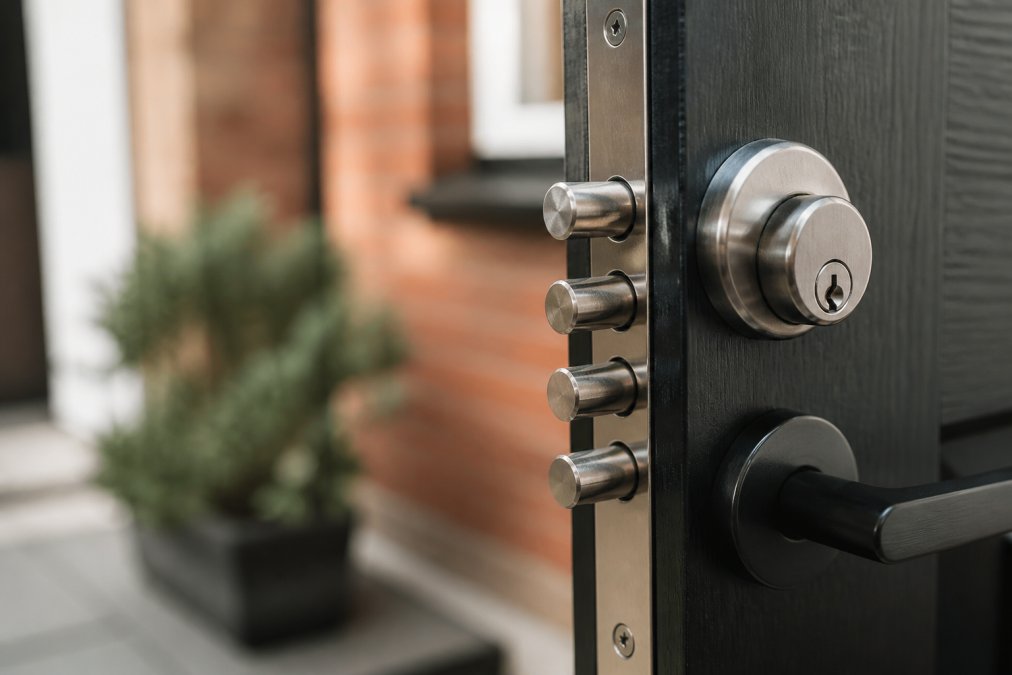
A high security door lock is a locking assembly engineered to resist forced entry, picking, bumping, drilling and cylinder extraction, and it is usually certified to a recognised standard rather than sold on the strength of its description alone.
Three components determine whether a lock qualifies:
- The cylinder mechanism, which contains the keyway and pin tumblers and is the part attackers target first
- The physical barrier, meaning the deadbolt, its throw length and the strike plate that receives it
- The security rating, an independent certification confirming the lock passed standardised attack testing
A lock can look substantial and still fail all three. Chunky handles and brushed finishes say nothing about tamper resistance. What matters is the certification stamped on the cylinder and the spec sheet behind it.
British Standard BS3621 Locks: The Benchmark for Security
British Standard BS3621 locks are the benchmark most insurers and locksmiths reference, because the standard tests a lock against sustained physical attack rather than a checklist of features. A BS3621 lock is a thief-resistant deadlock that has passed a defined set of manual and mechanical tests.
How BS3621 Testing Works
The standard requires a lock to survive a fixed period of attack with hand tools, then a further period with power tools, without the bolt being retracted or the lock being bypassed (bsigroup.com). It also covers the number of key differs available, which limits how easily a key can be duplicated or guessed, and it specifies minimum bolt strength and projection.
For a homeowner, the practical takeaway is simple. Look for the Kitemark and the BS3621 marking on the lock body or cylinder. If it is not there, the lock has not been tested to that standard, whatever the packaging claims. The British Standards Institution guidance on lock standards explains how certification is awarded and maintained.
Home Insurance Lock Requirements: What Your Policy Expects
Home insurance lock requirements are set by individual insurers, and most policies make cover conditional on the final exit door being secured to a recognised standard. Fail that condition and a theft claim can be reduced or refused, so the wording in your schedule matters as much as the lock on the door.
Policies typically specify that exterior doors are fitted with a BS3621 deadlock, or an equivalent standard for uPVC and composite doors where a full mortice deadlock is not practical (abi.org.uk). Some insurers name the standard directly in the policy schedule; others use looser wording such as "five-lever mortice deadlock" or "a lock approved by the insurer." The looser the wording, the more room there is for a dispute at claim stage, which is why it pays to get the requirement confirmed in writing before you buy.
What Different Door Types Usually Need
The requirement is not the same across every door, and this is where most homeowners get caught out:
- Timber final exit doors are normally expected to carry a BS3621 five-lever mortice deadlock, sometimes alongside a nightlatch on the same door.
- uPVC and composite doors usually need a multi-point locking system with a euro profile cylinder, and insurers increasingly expect that cylinder to be anti-snap and, where the standard is cited, to meet the relevant TS 007 or BS EN 1303 rating.
- French, patio and bi-fold doors are often treated as a separate risk category, with their own minimum specification for the locking points and the cylinder.
- Back and side doors are frequently overlooked. A policy that requires a certified lock on the final exit door will usually expect the same standard on any other accessible external door.
Sums Insured, Excesses and Documentation
Two further points decide whether a claim is paid cleanly. First, some policies apply a higher excess or a lower limit on theft of contents where the specified lock standard is not met, so the financial penalty can extend well beyond the door itself. Second, insurers may ask for proof of the lock specification after a break-in. Keeping the installer's certificate, the Kitemark reference and the key receipt together means you can evidence compliance without scrambling for paperwork.
A practical approach is to photograph the lock body and cylinder showing the BS3621 or TS 007 marking, note the installation date, and file it with the policy schedule. If you rent, the obligation usually sits with the landlord, but a tenant can still ask for written confirmation that the doors meet the insurer's requirement.
The Cost-Benefit Case Over Time
The long-term value of meeting the requirement is easy to understate. A certified cylinder and deadlock cost a fraction of the contents they protect, they rarely need replacing, and they remove the most common reason a theft claim gets disputed. Set against a reduced payout, a higher excess or a premium loaded after a claim, the upgrade usually pays for itself the first time it is tested, and it is the one home improvement that keeps working without any further spend.
Anti-Snap Lock Cylinder Benefits: Stopping the Most Common Attack
Anti-snap lock cylinder benefits come down to one thing: the cylinder breaks in a controlled way that leaves the locking mechanism intact. Lock snapping is the most common method used against euro cylinders, and it takes a matter of seconds.
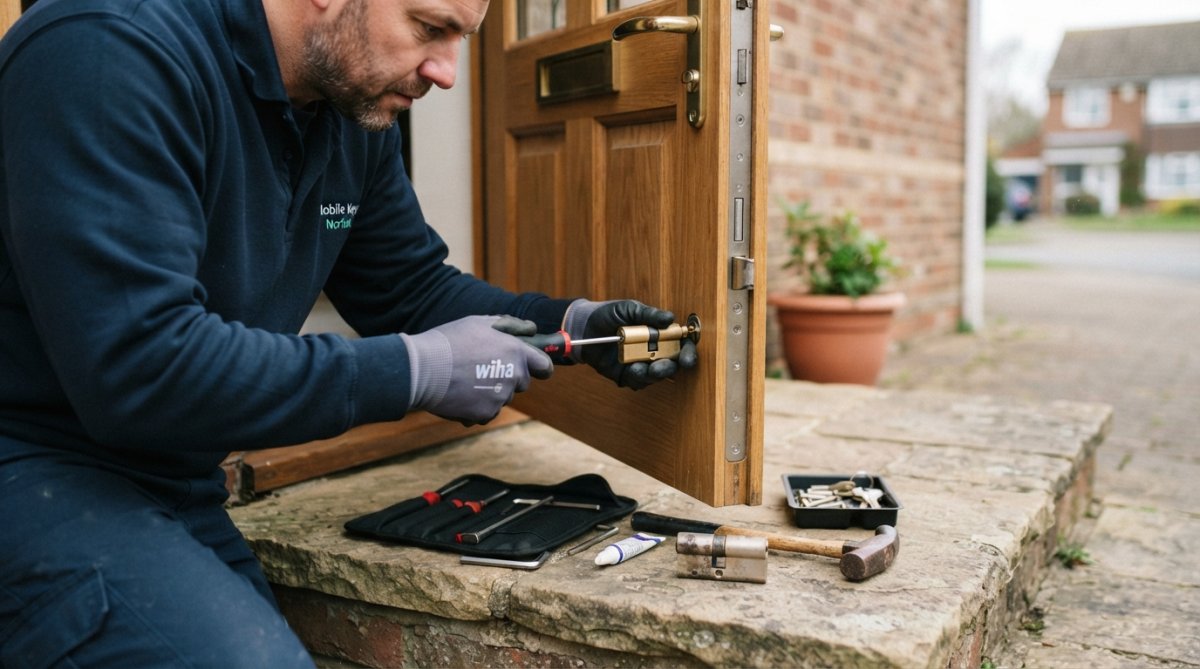
The technique works by gripping the cylinder where it protrudes from the door and applying force until it snaps at the weakest point. On an unprotected cylinder, that point sits inside the door, so the attacker can turn the mechanism with a screwdriver. An anti-snap cylinder is designed so the break occurs at a sacrificial section outside the door, leaving nothing behind to turn.
Anti-Bump, Anti-Pick and Anti-Drill Features
Snapping is only one route in. Bumping uses a specially cut key struck with force to jolt the pins into position, picking manipulates the pins by feel, and drilling attacks the pin chambers directly. A cylinder marketed as high security should address all four, and pick-resistant, drill-resistant and bump-resistant features are usually tested together rather than separately.
Smart Lock Technology and Integration With Your Home Security
Smart lock technology adds remote access, audit trails and integration with cameras and alarms, which changes how you manage access rather than simply how hard the door is to force. The angle most buying guides miss is integration: a smart lock is only as useful as the ecosystem it talks to, and a standalone connected lock is little more than a keyless handle.
What most buyers also miss is that a smart lock still relies on a mechanical cylinder underneath. A connected lock on a snap-prone cylinder is a connected lock on a snap-prone cylinder. Look for encryption on the wireless protocol, tamper detection that alerts you when the housing is disturbed, and biometric authentication or keyless entry where it genuinely replaces a key rather than duplicating it.
How Smart Locks Fit an Existing Security Ecosystem
A smart lock earns its place when it feeds the same system as your alarm and cameras, so events sit in one timeline rather than three separate apps. The practical integrations to look for are:
- Alarm systems, arming or disarming on a valid entry, and a lock event that triggers the alarm if the door is forced while armed.
- Cameras and doorbells, a clip recorded at the moment the lock is operated, which is far more useful than a motion alert with no context.
- Smart home hubs and voice assistants, scene control so a single command locks the door, arms the alarm and dims the lights.
- Access schedules, time-limited codes for cleaners, carers or tradespeople, which expire without you having to retrieve a key.
Encryption, Protocols and What to Check
Wireless security is where cheap smart locks fall down. Check that the lock uses an encrypted protocol rather than a proprietary unencrypted signal, that firmware updates are supported, and that the app requires more than a four-digit PIN. A lock that stores access logs in the cloud should also let you delete them, and any lock that offers remote unlocking should support two-factor authentication on the account.
The Trade-Off Against a Hardened Cylinder
A smart lock and a certified cylinder solve different problems. The cylinder resists physical attack; the smart lock manages who can enter and records when they did. Neither replaces the other, and the strongest setup pairs a BS3621 or TS 007-rated cylinder with a connected lock on top. That combination gives you the audit trail and the physical resistance, which is the point most standalone smart-lock marketing skips.
| Feature | What It Stops | Best For |
|---|---|---|
| Anti-snap cylinder | Cylinder extraction | uPVC and composite doors |
| BS3621 deadlock | Forced entry, picking | Timber final exit doors |
| Multi-point locking | Frame spreading | Composite and uPVC doors |
| Smart lock | Unauthorised key use | Rental and shared access |
Durability, Maintenance and Long-Term Value
Durability is where high security hardware earns its keep, and it is the angle most buying guides skip entirely. A certified cylinder is built from hardened steel and finished to resist corrosion, which matters on a door exposed to coastal weather and temperature swings.
Maintenance is modest but not optional. Graphite or a dry PTFE lubricant in the keyway once or twice a year keeps the pins moving freely. Avoid oil-based products, which attract grit and gum up the mechanism. Check the cylinder screw is tight and the cylinder does not protrude more than necessary, since protrusion is what gives a snapping tool its purchase.
The cost-benefit case is straightforward over time. A certified cylinder and deadbolt cost a fraction of the contents they protect, they rarely need replacing, and they remove the most common reason an insurance claim gets disputed. That is the long-term value: not a one-off improvement, but a permanent reduction in risk.
Key Management and Duplication Risks
Key management is the quiet vulnerability in most homes. A standard cylinder uses a limited number of key differs, and a key that can be copied at any high street cutter is a key that can be copied without your knowledge.
High security cylinders use restricted keyways and patented profiles, which means blanks are controlled and duplication requires authorisation. That restriction typically lasts for the life of the patent, after which the profile may open up. If a key goes missing, a restricted system lets you rekey or replace the affected cylinder without changing every lock in the property.
For households with cleaners, carers, tradespeople or short-term guests, this control is worth more than the cylinder itself. You know how many keys exist, and you can account for each one.
Conclusion
The gap between a standard cylinder and a certified high security lock is measured in seconds, and that is exactly the window most break-ins rely on. Closing it means checking the certification, matching the hardware to the door type, and keeping the mechanism maintained.
If you are locked out or your key has failed, that same principle applies to getting back in without damaging the door. Call 07399 583760 and we will come to you.
Frequently Asked Questions
Are high security door locks worth the extra cost?
The upfront cost is higher than a standard cylinder, but the maths works over time. A single break-in typically costs far more than the lock upgrade itself, once you add repairs, lost items and an insurance excess. High security door locks also last for years, so the cost spreads across a long service life. For most homes, the upgrade pays for itself through avoided risk, not just peace of mind.
What makes a door lock 'high security' according to British Standards?
The key benchmark is BS3621, which tests a lock against drilling, picking, bumping and physical force. A lock carrying this mark has passed a defined attack resistance standard, not just a manufacturer's claim. Some locks also carry a Sold Secure or Secured by Design rating. If a cylinder has no independent certification, treat any 'high security' label on the packaging with caution.
Can high security locks prevent lock snapping?
Anti-snap cylinders are specifically designed to resist this attack. When force is applied, the cylinder snaps at a pre-weakened point outside the door, leaving the locking mechanism intact inside. Without that feature, a thief can snap a standard cylinder in seconds and operate the lock. Anti-snap lock cylinder benefits include this break-away design, plus anti-bump and anti-pick pins that block other common entry methods.
Do high security locks affect home insurance premiums?
Many UK home insurance policies require BS3621 locks on external doors, and some will reject a claim if the locks do not meet the stated standard. Meeting home insurance lock requirements does not always reduce your premium directly, but it removes a common reason for a claim being refused. Check your policy wording or ask your insurer what standard they expect before you buy.