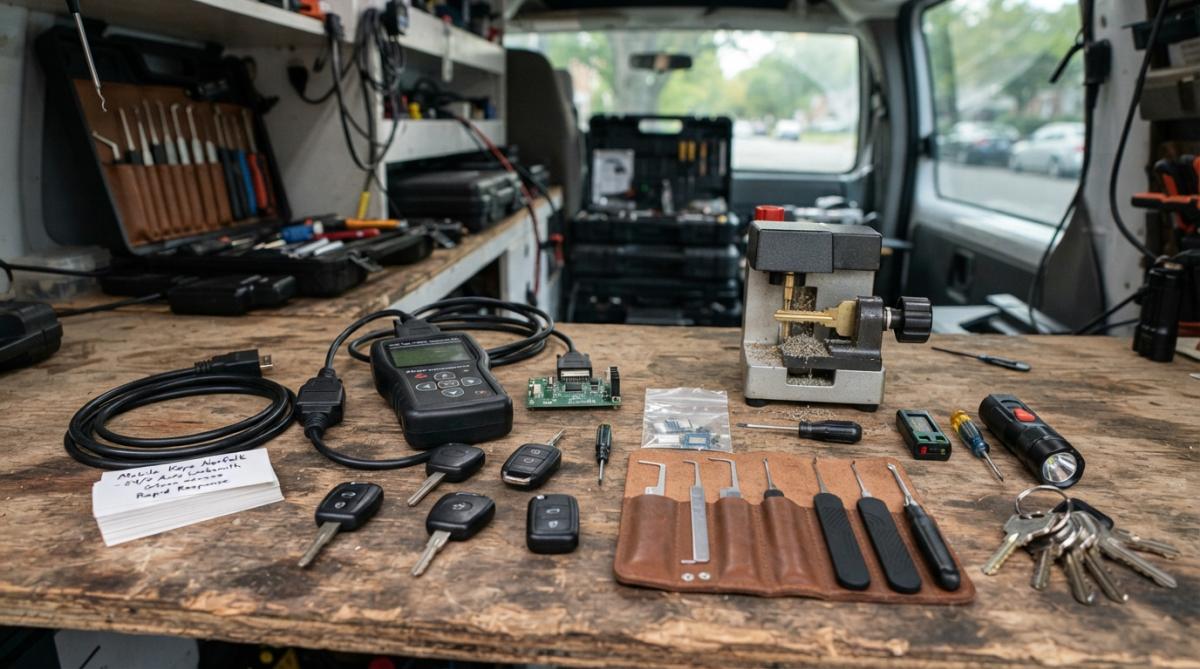
 blog
blog
10 Benefits of 24/7 Auto Locksmith Services
Table of Contents
- 24/7 Availability: Help Whenever You Need It
- Fast Response Times: How Quickly Can a Mobile Auto Locksmith Arrive?
- Mobile Service Convenience: We Come to You
- Expertise in Vehicle Security Systems and Transponder Key Programming
- Auto Locksmith vs Main Dealer: Cost-Effectiveness Compared
- Replacing Lost or Stolen Car Keys On-Site
- Opening Locked Vehicles Without Damage
- How Long Does It Take to Replace a Car Key?
- Frequently Asked Questions
Last Updated: September 11, 2026
24/7 Availability: Help Whenever You Need It
A 24/7 auto locksmith service operates around the clock, every day of the year, so a lockout at 2am on a Sunday gets the same response as one at midday on a Tuesday. For drivers in Norfolk, that matters more than most people realise until the moment they are standing in a dark car park with no way home.
Car keys do not fail at convenient times. Shift workers finishing at 4am, parents loading shopping in the rain, commuters who drop their keys down a drain outside the office. The list is endless, and none of it follows office hours.
Traditional garages and main dealers work to fixed schedules. If your key fails on a Friday evening, the earliest you will likely be seen is Monday morning. That is two days of lost work, cancelled plans, or expensive taxi fares.
Fast Response Times: How Quickly Can a Mobile Auto Locksmith Arrive?
A mobile auto locksmith typically arrives within 30 to 60 minutes for urgent callouts in built-up areas, with rural locations taking longer depending on distance (aaa.com). We aim for a 30-minute arrival time.
Realistic expectations matter here. If you are on the outskirts of Norwich or down a quiet lane in the Broads, the technician has to physically get to you. Traffic, road closures, and weather all play a part. Any locksmith promising a guaranteed 15-minute arrival anywhere is not being straight with you.
What you should ask when you call:
- Where is the nearest technician right now?
- How long have they been given to reach me?
- Will you call me if that changes?
A legitimate operator will answer all three without hesitation.
Mobile Service Convenience: We Come to You
Mobile locksmiths bring the workshop to your location, which means no towing, no recovery fees, and no waiting in a garage reception area. The van carries the cutting and programming equipment needed to produce a working key on the spot.
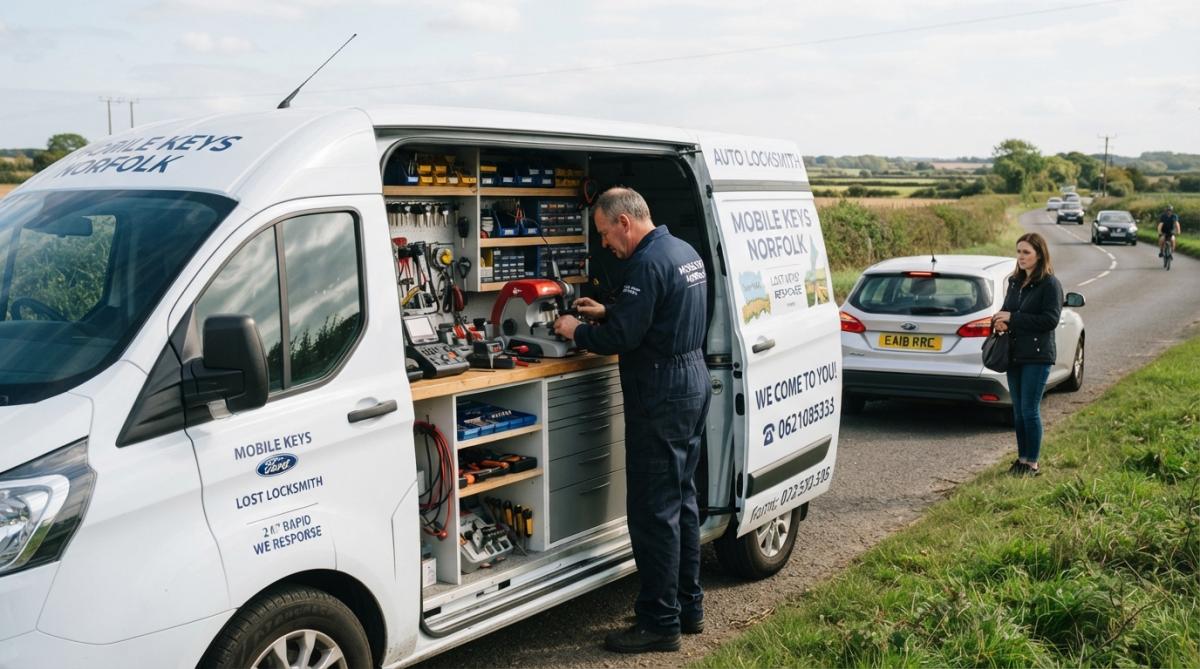
This is the single biggest shift in the trade over the past decade. Where drivers once had to have a vehicle recovered to a dealer just to get a replacement key cut, a mobile technician can now handle the entire job in a driveway, a supermarket car park, or the hard shoulder.
For anyone who has had to pay for recovery, the difference is obvious. Recovery gets your car to a garage. It does not get you a new key, and it does not get you home.
Expertise in Vehicle Security Systems and Transponder Key Programming
Modern vehicles rely on transponder chips, immobilisers, and encrypted key fobs, and programming a replacement requires diagnostic equipment matched to the specific make and model (nhtsa.gov). This is where the gap between a general handyman and a trained auto locksmith becomes obvious.
Transponder key programming is the process of coding a new key's electronic chip to match your vehicle's immobiliser so the engine will start. Get it wrong and the car will not turn over, no matter how well the key is cut.
Keyless entry systems, introduced on many models over the past several years, add another layer. These fobs communicate on rolling codes, and a replacement needs to be paired to the vehicle's security module rather than simply duplicated.
Certification matters. Look for a locksmith who can tell you exactly which systems they cover and which they do not. Honesty about limitations is a better sign than a blanket "we do everything" claim.
Auto Locksmith vs Main Dealer: Cost-Effectiveness Compared
The auto locksmith vs main dealer comparison usually comes down to three factors: price, speed, and whether you need the car moved. Independent mobile locksmiths generally cost less than franchised dealers, arrive faster, and work at your location rather than requiring recovery.
Dealers have their place. If your vehicle is under manufacturer warranty and the fault relates to a covered component, going through the dealer protects that cover. For a straightforward lost or broken key, though, the dealer route involves booking slots, recovery, and often a wait for the key to be ordered in.
| Factor | Mobile Auto Locksmith | Main Dealer |
|---|---|---|
| Typical wait | Same day, often within the hour | Several days to book in |
| Vehicle recovery needed | No | Often yes |
| Work location | Your home, work, or roadside | Dealer workshop only |
| Key ordering | Cut and programmed on site | Frequently ordered from factory |
| Warranty impact | None on unrelated systems | None if work is covered |
What actually drives the price
Headline prices are misleading because the job is rarely the same twice. In practice, a quote is built from a handful of variables:
- Key type. A basic mechanical blade is the cheapest job. A transponder key with a remote adds cost. A smart keyless fob on a recent model is the most expensive, because the blank itself carries the chip and the pairing procedure is longer.
- Time of day. Out-of-hours callouts, evenings, weekends, bank holidays, attract a premium because the technician is working unsociable hours. A weekday daytime job in your own driveway will usually be the cheapest slot.
- Distance and location. A callout in a town centre is quicker to reach than a rural lane. Some operators charge a mileage band beyond a core radius; ask before you book.
- All keys lost vs spare. If you still have one working key, the technician can often clone or add a spare quickly. If every key is gone, the vehicle has to be put into a key-learning state, which takes longer and costs more.
- Vehicle access. A car parked nose-in against a wall, on a tight residential street, or on a motorway hard shoulder changes how the technician can work.
A reputable operator will confirm the price before attending and stick to it. If a quote is vague, or only given after the work is done, treat that as a warning sign.
The insurance and liability angle most drivers miss
This is the part almost no article covers, and it matters. If your keys were stolen, the question of who is liable if the car is subsequently taken is not just about the locksmith, it is about your insurer.
Most motor policies require you to take reasonable steps to secure the vehicle (iii.org). Reporting the theft to the police and having the missing key deleted from the immobiliser is part of that. A mobile auto locksmith can carry out the deletion on site, which gives you a documented, dated record of when the stolen key stopped working. Keep that receipt, some insurers will ask for it if a claim follows.
On the locksmith's side, a properly run business carries public liability and, where relevant, commercial motor cover. Ask. A legitimate operator will tell you what cover they hold without hesitation, and a refusal to answer is a red flag. This is also why paying by card or bank transfer, rather than cash only, is worth insisting on: it leaves a paper trail.
Replacing Lost or Stolen Car Keys On-Site
On-site replacement means the new key is cut and programmed at your location, and in most cases the old key can be deleted from the vehicle's system at the same time. That last part matters if the key was stolen rather than simply lost.
Here is the typical process:
- Confirm ownership and vehicle details before any work begins
- Verify the key type and whether the vehicle uses a transponder, remote, or keyless system
- Cut the new key blade to the vehicle's lock profile
- Program the transponder or fob to the immobiliser
- Delete any missing keys from the system so a stolen key cannot start the car
- Test every function, including central locking and the ignition
That final deletion step is the one most drivers do not think to ask for. If your keys were taken, leaving the old key active in the system is a security risk you do not want to carry.
If your keys were stolen: what to do while you wait
This is the part most guides skip. If the keys were taken rather than simply lost, the wait for the technician is not passive time, it is when you limit the damage.
- Report it to the police and get a crime reference number. Most insurers will ask for this if a claim follows, and it establishes the timeline if the vehicle is later moved.
- Tell your insurer. Even if you do not intend to claim, logging the theft protects you if the car is taken before the key is deleted.
- Move the car if you safely can. If the stolen key was for a vehicle parked on a public road, getting it onto a driveway or into a garage reduces the window of risk.
- Do not leave valuables or documents in the vehicle. A stolen key often comes with a stolen wallet or bag, and the vehicle is the obvious place to look.
- Note the time you called the locksmith. The deletion is timestamped on the receipt, and that record is what proves when the key stopped working.
Which vehicles are hardest to reprogram, and why
A locksmith who claims every job is identical is not being straight with you. Some vehicles are genuinely harder than others, and knowing why helps you understand the quote and the wait.
- Older mechanical keys. The simplest job. Cut the blade, hand it over. No electronics involved.
- Standard transponder keys. The chip is coded to the immobiliser. Most mobile technicians carry the diagnostic equipment to do this on site.
- Remote and flip keys. Add a radio transmitter for central locking, which has to be paired as well as the chip.
- Keyless entry and keyless-go fobs. These use rolling codes and, on many recent models, are paired to the vehicle's security module rather than simply duplicated. Some manufacturers restrict access to key data, which means the technician may need a subscription-based diagnostic platform to complete the job.
- Vehicles with all keys lost. The car has to be forced into a key-learning state, which is slower and sometimes requires the vehicle to be immobilised for a period.
If your vehicle falls into one of the harder categories, mention the make, model, and year when you call. It lets the technician bring the right blank and equipment first time, rather than making a second trip.
Opening Locked Vehicles Without Damage
Non-destructive entry is the standard for professional auto locksmiths, using specialist tools that manipulate the locking mechanism rather than forcing the door. A trained technician can open most vehicles without a scratch.
The technique depends on the car. Older vehicles with mechanical locks respond to traditional picking tools. Newer models with central locking and deadlocks need different methods, sometimes involving an air wedge and a long-reach tool to operate the interior handle.
What you should never accept is a locksmith who reaches straight for a screwdriver or a coat hanger. Damage to door seals, window regulators, or lock cylinders can cost far more to repair than the entry itself.
How Long Does It Take to Replace a Car Key?
Most replacement car keys take between 15 and 45 minutes to cut and program on site, assuming the correct blank and equipment are on board. Older mechanical keys sit at the fast end; keyless fobs on newer vehicles take longer.
Several things affect the timing:
- Whether the vehicle's security system requires a diagnostic session
- Whether all keys have been lost, which sometimes needs extra programming steps
- The make and model, as some manufacturers restrict access to key data
- Whether the vehicle is present, since programming requires the car itself
If you have lost every key, expect the job to take longer than a simple spare. The technician has to establish a new master key before any duplicates can be made.
Frequently Asked Questions
How quickly can a mobile auto locksmith arrive?
Response times depend on your location and traffic, but a dedicated mobile auto locksmith typically aims to reach you within 30 minutes for urgent call-outs. If you are on the outskirts of a city or in a rural area, it may take slightly longer. When you call, the dispatcher should give you a realistic arrival window based on your exact location. Always confirm the estimated time before you hang up so you can plan accordingly.
Is it cheaper to use a mobile locksmith than a main dealer?
In most cases, yes. Main dealers often charge higher labour rates and may require your vehicle to be towed to their workshop, adding recovery costs on top. A mobile auto locksmith comes to you, cuts and programs the key on-site, and typically charges less for the same work. The exact saving depends on your car model and key type, so ask for a quote upfront before committing.
Can a 24/7 locksmith help if I have lost all my car keys?
Yes. A professional auto locksmith carries diagnostic tools that can read your vehicle's immobiliser system and program a brand-new key from scratch, even if you have no original key to copy. This process is known as all-keys-lost programming. You will need to provide proof of ownership, such as your V5C logbook and photo ID, before the technician begins work.
What should I do if I am locked out of my car at night?
Stay in a safe, well-lit area and call a 24/7 auto locksmith immediately. Avoid attempting to force the door open yourself, as this can damage the lock mechanism or window seals. Give the dispatcher your exact location, vehicle make and model, and registration number. A mobile technician will arrive with non-destructive entry tools to open the vehicle without causing damage.
Losing a car key is one of those problems that feels minor until you are the one standing outside a locked vehicle with somewhere to be. Mobile Keys Norfolk exists to remove that problem entirely, with 24/7 availability, a 30-minute arrival target, and on-site cutting and programming that gets you moving without recovery fees or dealer waiting lists. Call 07399 583760 and we will come to you, day or night, and get you back on the road.